Commander Synergies
Discover cards that synergize perfectly with your Commander.
Synergy
Card Details
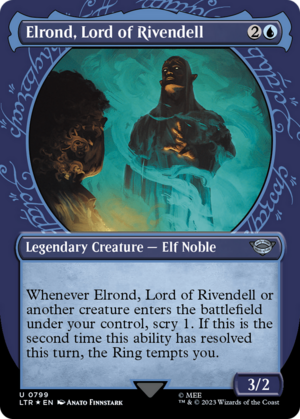
Elrond, Lord of Rivendell #799 Legendary Creature — Elf Noble
Info
| Color: |  |
| Identifies: | |
| Cost: |
  |
| Rarity: | Uncommon |
| Converted Cost: | 3 |
| Power/Toughness: | 3/2 |
| Types: | |
| SubTypes: | |
| Languages: | 
|
| Layout: | Normal |
| Rank: | |
| Saltiness: | |
| Tokens: |
Abilities/Keywords
Rules
Legalities
Modern
Competitivebrawl
Brawl
Historic
Oldschool
Standard
Alchemy
Pioneer
Legacy
Duel
Pauper
Predh
Commander
Timeless
Vintage
Penny
Oathbreaker
Paupercommander
Future
Standardbrawl
Gladiator
Premodern
Text
Whenever Elrond or another creature you control enters, scry 1. If this is the second time this ability has resolved this turn, the Ring tempts you.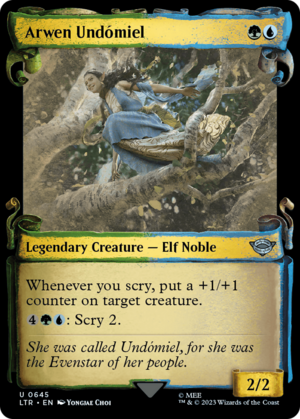
Card Details
Arwen Undómiel #645 Legendary Creature — Elf Noble
Info
| Color: |  |
| Identifies: | |
| Cost: |
 |
| Rarity: | Uncommon |
| Converted Cost: | 2 |
| Power/Toughness: | 2/2 |
| Types: | |
| SubTypes: | |
| Languages: |
       |
| Layout: | Normal |
| Rank: | |
| Saltiness: |
Abilities/Keywords
Rules
Prices
Legalities
Modern
Competitivebrawl
Brawl
Historic
Oldschool
Standard
Alchemy
Pioneer
Legacy
Duel
Pauper
Predh
Commander
Timeless
Vintage
Penny
Oathbreaker
Paupercommander
Future
Standardbrawl
Gladiator
Premodern
Text
Whenever you scry, put a +1/+1counteron target creature. : Scry 2.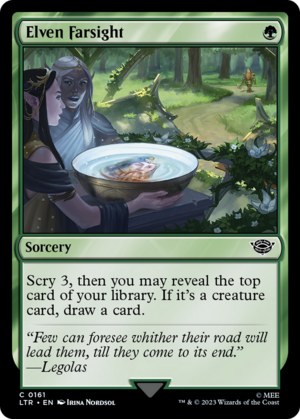
Card Details
Elven Farsight #161 Sorcery
Info
| Color: | |
| Identifies: | |
| Cost: |
|
| Rarity: | Common |
| Converted Cost: | 1 |
| Power/Toughness: | / |
| Types: | |
| SubTypes: | |
| Languages: |
|
| Layout: | Normal |
| Rank: | |
| Saltiness: |
Abilities/Keywords
Rules
Prices
Legalities
Modern
Competitivebrawl
Brawl
Historic
Oldschool
Standard
Alchemy
Pioneer
Legacy
Duel
Pauper
Predh
Commander
Timeless
Vintage
Penny
Oathbreaker
Paupercommander
Future
Standardbrawl
Gladiator
Premodern
Text
Scry 3, then you may reveal the top card of your library. If a creature card is revealed this way, draw a card.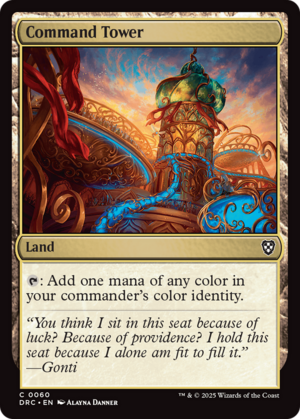
Card Details
Command Tower #60 Land
Info
| Color: |  |
| Identifies: | |
| Cost: | |
| Rarity: | Common |
| Converted Cost: | 0 |
| Power/Toughness: | / |
| Types: | |
| SubTypes: | |
| Languages: |
  |
| Layout: | Normal |
| Rank: | |
| Saltiness: |
Rules
Legalities
Modern
Competitivebrawl
Brawl
Historic
Oldschool
Standard
Alchemy
Pioneer
Legacy
Duel
Pauper
Predh
Commander
Timeless
Vintage
Penny
Oathbreaker
Paupercommander
Future
Standardbrawl
Gladiator
Premodern
Text
 : Add one mana of any color in your commander's color identity.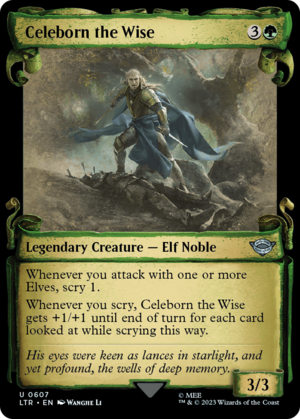
Card Details
Celeborn the Wise #607 Legendary Creature — Elf Noble
Info
| Color: | |
| Identifies: | |
| Cost: |
 |
| Rarity: | Uncommon |
| Converted Cost: | 4 |
| Power/Toughness: | 3/3 |
| Types: | |
| SubTypes: | |
| Languages: |
|
| Layout: | Normal |
| Rank: | |
| Saltiness: |
Abilities/Keywords
Rules
Prices
Legalities
Modern
Competitivebrawl
Brawl
Historic
Oldschool
Standard
Alchemy
Pioneer
Legacy
Duel
Pauper
Predh
Commander
Timeless
Vintage
Penny
Oathbreaker
Paupercommander
Future
Standardbrawl
Gladiator
Premodern
Text
Whenever you attack with one or more Elves, scry 1. Whenever you scry, Celeborn gets +1/+1 until end of turn for each card looked at while scrying this way.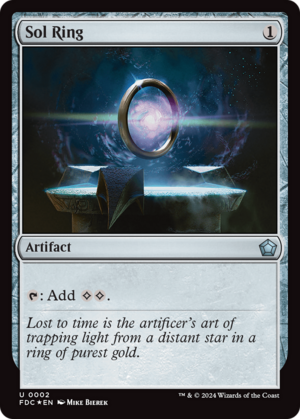
Card Details
Sol Ring #2 Artifact
Info
| Color: | |
| Identifies: | |
| Cost: |
 |
| Rarity: | Uncommon |
| Converted Cost: | 1 |
| Power/Toughness: | / |
| Types: | |
| SubTypes: | |
| Languages: |
|
| Layout: | Normal |
| Rank: | |
| Saltiness: |
Rules
Legalities
Modern
Competitivebrawl
Brawl
Historic
Oldschool
Standard
Alchemy
Pioneer
Legacy
Duel
Pauper
Predh
Commander
Timeless
Vintage
Penny
Oathbreaker
Paupercommander
Future
Standardbrawl
Gladiator
Premodern
Text
: Add . 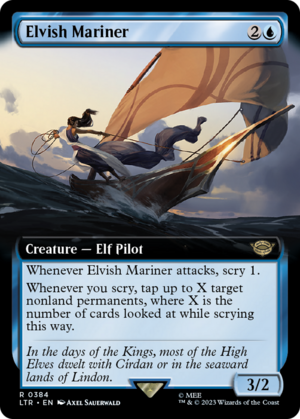
Card Details
Elvish Mariner #384 Creature — Elf Pilot
Info
| Color: | |
| Identifies: | |
| Cost: |
|
| Rarity: | Rare |
| Converted Cost: | 3 |
| Power/Toughness: | 3/2 |
| Types: | |
| SubTypes: | |
| Languages: |
|
| Layout: | Normal |
| Rank: | |
| Saltiness: |
Abilities/Keywords
Rules
Text
Whenever this creature attacks, scry 1. Whenever you scry, tap up to X target nonland permanents, where X is the number of cards looked at while scrying this way.
Card Details
Rivendell #755 Legendary Land
Info
| Color: | |
| Identifies: | |
| Cost: | |
| Rarity: | Rare |
| Converted Cost: | 0 |
| Power/Toughness: | / |
| Types: | |
| SubTypes: | |
| Languages: |
|
| Layout: | Normal |
| Rank: | |
| Saltiness: |
Abilities/Keywords
Rules
Legalities
Modern
Competitivebrawl
Brawl
Historic
Oldschool
Standard
Alchemy
Pioneer
Legacy
Duel
Pauper
Predh
Commander
Timeless
Vintage
Penny
Oathbreaker
Paupercommander
Future
Standardbrawl
Gladiator
Premodern
Text
Rivendell enters tapped unless you control a legendary creature.: Add .
 , : Scry 2. Activate only if you control a legendary creature.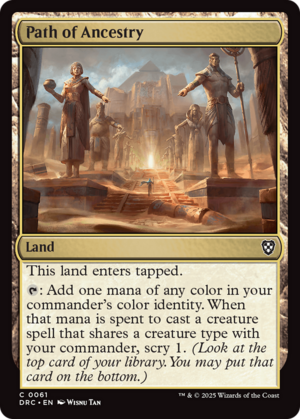
Card Details
Path of Ancestry #61 Land
Info
| Color: | |
| Identifies: | |
| Cost: | |
| Rarity: | Common |
| Converted Cost: | 0 |
| Power/Toughness: | / |
| Types: | |
| SubTypes: | |
| Languages: |
|
| Layout: | Normal |
| Rank: | |
| Saltiness: |
Abilities/Keywords
Rules
Legalities
Modern
Competitivebrawl
Brawl
Historic
Oldschool
Standard
Alchemy
Pioneer
Legacy
Duel
Pauper
Predh
Commander
Timeless
Vintage
Penny
Oathbreaker
Paupercommander
Future
Standardbrawl
Gladiator
Premodern
Text
This land enters tapped.: Add one mana of any color in your commander's color identity. When that mana is spent to cast a creature spell that shares a creature type with your commander, scry 1. (Look at the top card of your library. You may put that card on the bottom.) 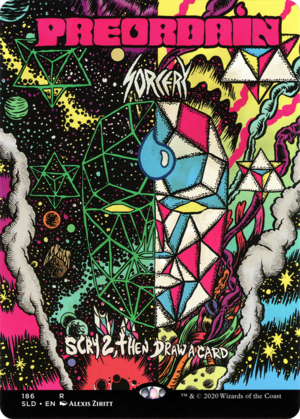
Card Details
Preordain #186 Sorcery
Info
| Color: | |
| Identifies: | |
| Cost: |
|
| Rarity: | Rare |
| Converted Cost: | 1 |
| Power/Toughness: | / |
| Types: | |
| SubTypes: | |
| Languages: |
|
| Layout: | Normal |
| Rank: | |
| Saltiness: |
Abilities/Keywords
Rules
Legalities
Modern
Competitivebrawl
Brawl
Historic
Oldschool
Standard
Alchemy
Pioneer
Legacy
Duel
Pauper
Predh
Commander
Timeless
Vintage
Penny
Oathbreaker
Paupercommander
Future
Standardbrawl
Gladiator
Premodern
Text
Scry 2, then draw a card. (To scry 2, look at the top two cards of your library, then put any number of them on the bottom and the rest on top in any order.)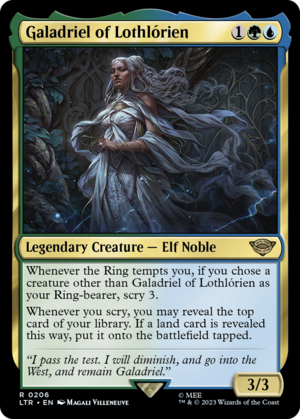
Card Details
Galadriel of Lothlórien #206 Legendary Creature — Elf Noble
Info
| Color: | |
| Identifies: | |
| Cost: |
|
| Rarity: | Rare |
| Converted Cost: | 3 |
| Power/Toughness: | 3/3 |
| Types: | |
| SubTypes: | |
| Languages: |
|
| Layout: | Normal |
| Rank: | |
| Saltiness: | |
| Tokens: |
Abilities/Keywords
Rules
Prices
Legalities
Modern
Competitivebrawl
Brawl
Historic
Oldschool
Standard
Alchemy
Pioneer
Legacy
Duel
Pauper
Predh
Commander
Timeless
Vintage
Penny
Oathbreaker
Paupercommander
Future
Standardbrawl
Gladiator
Premodern
Text
Whenever the Ring tempts you, if you chose a creature other than Galadriel as your Ring-bearer, scry 3. Whenever you scry, you may reveal the top card of your library. If a land card is revealed this way, put it onto the battlefield tapped.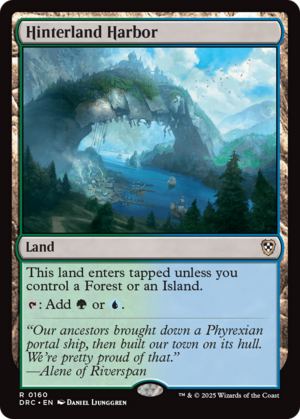
Card Details
Hinterland Harbor #160 Land
Info
| Color: | |
| Identifies: | |
| Cost: | |
| Rarity: | Rare |
| Converted Cost: | 0 |
| Power/Toughness: | / |
| Types: | |
| SubTypes: | |
| Languages: |
|
| Layout: | Normal |
| Rank: | |
| Saltiness: |
Rules
Legalities
Modern
Competitivebrawl
Brawl
Historic
Oldschool
Standard
Alchemy
Pioneer
Legacy
Duel
Pauper
Predh
Commander
Timeless
Vintage
Penny
Oathbreaker
Paupercommander
Future
Standardbrawl
Gladiator
Premodern
Text
This land enters tapped unless you control a Forest or an Island.: Add or . 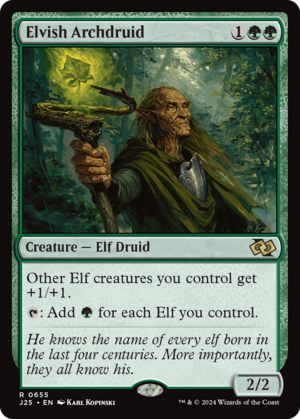
Card Details
Elvish Archdruid #655 Creature — Elf Druid
Info
| Color: | |
| Identifies: | |
| Cost: |
|
| Rarity: | Rare |
| Converted Cost: | 3 |
| Power/Toughness: | 2/2 |
| Types: | |
| SubTypes: | |
| Languages: |
|
| Layout: | Normal |
| Rank: | |
| Saltiness: |
Rules
Legalities
Modern
Competitivebrawl
Brawl
Historic
Oldschool
Standard
Alchemy
Pioneer
Legacy
Duel
Pauper
Predh
Commander
Timeless
Vintage
Penny
Oathbreaker
Paupercommander
Future
Standardbrawl
Gladiator
Premodern
Text
Other Elf creatures you control get +1/+1.: Add for each Elf you control. 
Card Details
The Grey Havens #443 Legendary Land
Info
| Color: | |
| Identifies: | |
| Cost: | |
| Rarity: | Uncommon |
| Converted Cost: | 0 |
| Power/Toughness: | / |
| Types: | |
| SubTypes: | |
| Languages: |
|
| Layout: | Normal |
| Rank: | |
| Saltiness: |
Abilities/Keywords
Rules
Prices
Legalities
Modern
Competitivebrawl
Brawl
Historic
Oldschool
Standard
Alchemy
Pioneer
Legacy
Duel
Pauper
Predh
Commander
Timeless
Vintage
Penny
Oathbreaker
Paupercommander
Future
Standardbrawl
Gladiator
Premodern
Text
When The Grey Havens enters, scry 1.: Add .
: Add one mana of any color among legendary creature cards in your graveyard. 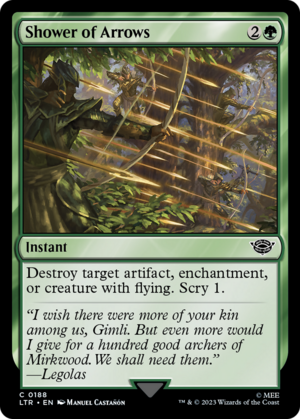
Card Details
Shower of Arrows #188 Instant
Info
| Color: | |
| Identifies: | |
| Cost: |
|
| Rarity: | Common |
| Converted Cost: | 3 |
| Power/Toughness: | / |
| Types: | |
| SubTypes: | |
| Languages: |
|
| Layout: | Normal |
| Rank: | |
| Saltiness: |
Abilities/Keywords
Rules
Prices
Legalities
Modern
Competitivebrawl
Brawl
Historic
Oldschool
Standard
Alchemy
Pioneer
Legacy
Duel
Pauper
Predh
Commander
Timeless
Vintage
Penny
Oathbreaker
Paupercommander
Future
Standardbrawl
Gladiator
Premodern
Text
Destroy target artifact, enchantment, or creature with flying. Scry 1.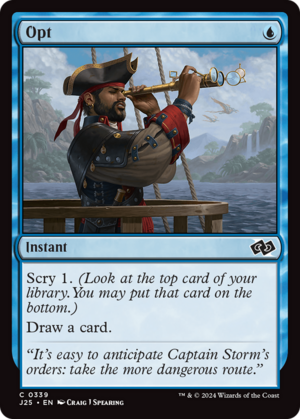
Card Details
Opt #339 Instant
Info
| Color: | |
| Identifies: | |
| Cost: |
|
| Rarity: | Common |
| Converted Cost: | 1 |
| Power/Toughness: | / |
| Types: | |
| SubTypes: | |
| Languages: |
|
| Layout: | Normal |
| Rank: | |
| Saltiness: |
Abilities/Keywords
Rules
Legalities
Modern
Competitivebrawl
Brawl
Historic
Oldschool
Standard
Alchemy
Pioneer
Legacy
Duel
Pauper
Predh
Commander
Timeless
Vintage
Penny
Oathbreaker
Paupercommander
Future
Standardbrawl
Gladiator
Premodern
Text
Scry 1. (Look at the top card of your library. You may put that card on the bottom.) Draw a card.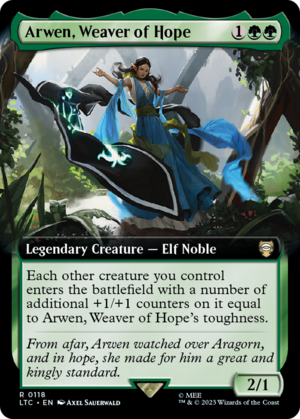
Card Details
Arwen, Weaver of Hope #118 Legendary Creature — Elf Noble
Info
| Color: | |
| Identifies: | |
| Cost: |
|
| Rarity: | Rare |
| Converted Cost: | 3 |
| Power/Toughness: | 2/1 |
| Types: | |
| SubTypes: | |
| Languages: |
|
| Layout: | Normal |
| Rank: | |
| Saltiness: |
Rules
Legalities
Modern
Competitivebrawl
Brawl
Historic
Oldschool
Standard
Alchemy
Pioneer
Legacy
Duel
Pauper
Predh
Commander
Timeless
Vintage
Penny
Oathbreaker
Paupercommander
Future
Standardbrawl
Gladiator
Premodern
Text
Each other creature you control enters with a number of additional +1/+1 counters on it equal to Arwen's toughness.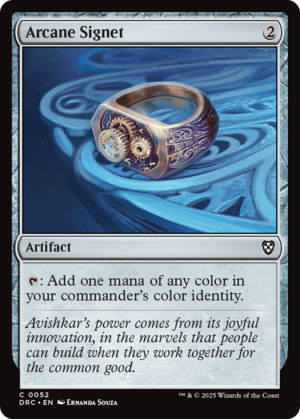
Card Details
Arcane Signet #52 Artifact
Info
| Color: | |
| Identifies: | |
| Cost: |
|
| Rarity: | Common |
| Converted Cost: | 2 |
| Power/Toughness: | / |
| Types: | |
| SubTypes: | |
| Languages: |
|
| Layout: | Normal |
| Rank: | |
| Saltiness: |
Rules
Legalities
Modern
Competitivebrawl
Brawl
Historic
Oldschool
Standard
Alchemy
Pioneer
Legacy
Duel
Pauper
Predh
Commander
Timeless
Vintage
Penny
Oathbreaker
Paupercommander
Future
Standardbrawl
Gladiator
Premodern
Text
: Add one mana of any color in your commander's color identity. 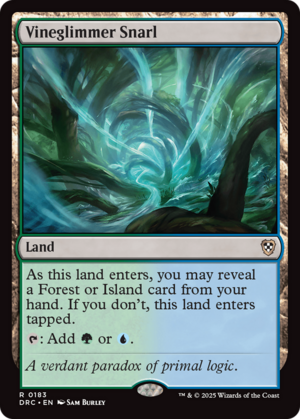
Card Details
Vineglimmer Snarl #183 Land
Info
| Color: | |
| Identifies: | |
| Cost: | |
| Rarity: | Rare |
| Converted Cost: | 0 |
| Power/Toughness: | / |
| Types: | |
| SubTypes: | |
| Languages: |
|
| Layout: | Normal |
| Rank: | |
| Saltiness: |
Rules
Legalities
Modern
Competitivebrawl
Brawl
Historic
Oldschool
Standard
Alchemy
Pioneer
Legacy
Duel
Pauper
Predh
Commander
Timeless
Vintage
Penny
Oathbreaker
Paupercommander
Future
Standardbrawl
Gladiator
Premodern
Text
As this land enters, you may reveal a Forest or Island card from your hand. If you don't, this land enters tapped.: Add or . 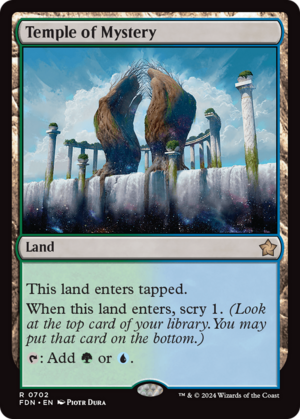
Card Details
Temple of Mystery #702 Land
Info
| Color: | |
| Identifies: | |
| Cost: | |
| Rarity: | Rare |
| Converted Cost: | 0 |
| Power/Toughness: | / |
| Types: | |
| SubTypes: | |
| Languages: |
|
| Layout: | Normal |
| Rank: | |
| Saltiness: |
Abilities/Keywords
Rules
Legalities
Modern
Competitivebrawl
Brawl
Historic
Oldschool
Standard
Alchemy
Pioneer
Legacy
Duel
Pauper
Predh
Commander
Timeless
Vintage
Penny
Oathbreaker
Paupercommander
Future
Standardbrawl
Gladiator
Premodern
Text
This land enters tapped. When this land enters, scry 1. (Look at the top card of your library. You may put that card on the bottom.): Add or . 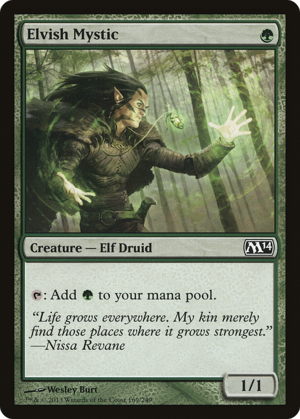
Card Details
Elvish Mystic #169 aka. Fishstick Creature — Elf Druid
Info
| Color: | |
| Identifies: | |
| Cost: |
|
| Rarity: | Common |
| Converted Cost: | 1 |
| Power/Toughness: | 1/1 |
| Types: | |
| SubTypes: | |
| Languages: |
|
| Layout: | Normal |
| Rank: | |
| Saltiness: |
Rules
Prices
Legalities
Modern
Competitivebrawl
Brawl
Historic
Oldschool
Standard
Alchemy
Pioneer
Legacy
Duel
Pauper
Predh
Commander
Timeless
Vintage
Penny
Oathbreaker
Paupercommander
Future
Standardbrawl
Gladiator
Premodern
Text
: Add . 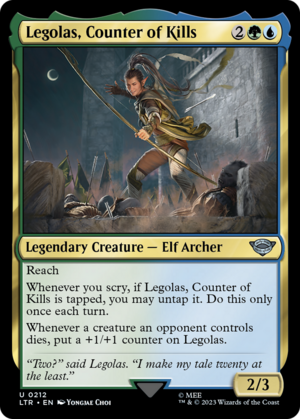
Card Details
Legolas, Counter of Kills #212 Legendary Creature — Elf Archer
Info
| Color: | |
| Identifies: | |
| Cost: |
|
| Rarity: | Uncommon |
| Converted Cost: | 4 |
| Power/Toughness: | 2/3 |
| Types: | |
| SubTypes: | |
| Languages: |
|
| Layout: | Normal |
| Rank: | |
| Saltiness: |
Abilities/Keywords
Rules
Prices
Legalities
Modern
Competitivebrawl
Brawl
Historic
Oldschool
Standard
Alchemy
Pioneer
Legacy
Duel
Pauper
Predh
Commander
Timeless
Vintage
Penny
Oathbreaker
Paupercommander
Future
Standardbrawl
Gladiator
Premodern
Text
Reach Whenever you scry, if Legolas is tapped, you may untap it. Do this only once each turn. Whenever a creature an opponent controls dies, put a +1/+1counteron Legolas.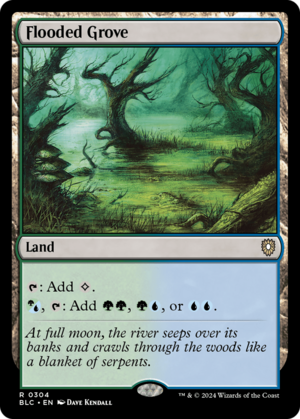
Card Details
Flooded Grove #304 Land
Info
| Color: | |
| Identifies: | |
| Cost: | |
| Rarity: | Rare |
| Converted Cost: | 0 |
| Power/Toughness: | / |
| Types: | |
| SubTypes: | |
| Languages: |
|
| Layout: | Normal |
| Rank: | |
| Saltiness: |
Rules
Legalities
Modern
Competitivebrawl
Brawl
Historic
Oldschool
Standard
Alchemy
Pioneer
Legacy
Duel
Pauper
Predh
Commander
Timeless
Vintage
Penny
Oathbreaker
Paupercommander
Future
Standardbrawl
Gladiator
Premodern
Text
: Add .
 , : Add , , or .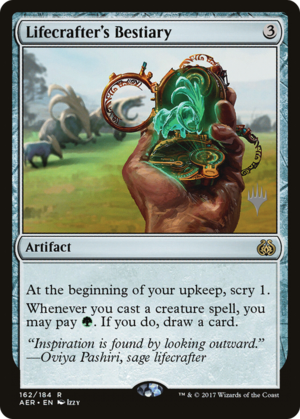
Card Details
Lifecrafter's Bestiary #162p Artifact
Info
| Color: | |
| Identifies: | |
| Cost: |
|
| Rarity: | Rare |
| Converted Cost: | 3 |
| Power/Toughness: | / |
| Types: | |
| SubTypes: | |
| Languages: |
|
| Layout: | Normal |
| Rank: | |
| Saltiness: |
Abilities/Keywords
Rules
Prices
Legalities
Modern
Competitivebrawl
Brawl
Historic
Oldschool
Standard
Alchemy
Pioneer
Legacy
Duel
Pauper
Predh
Commander
Timeless
Vintage
Penny
Oathbreaker
Paupercommander
Future
Standardbrawl
Gladiator
Premodern
Text
At the beginning of your upkeep, scry 1. Whenever you cast a creature spell, you may pay. If you do, draw a card. 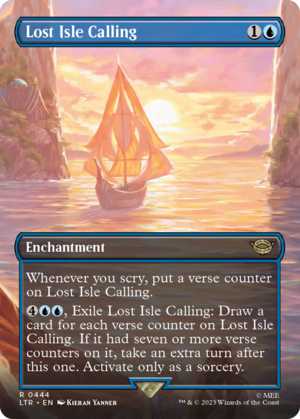
Card Details
Lost Isle Calling #444 Enchantment
Info
| Color: | |
| Identifies: | |
| Cost: |
|
| Rarity: | Rare |
| Converted Cost: | 2 |
| Power/Toughness: | / |
| Types: | |
| SubTypes: | |
| Languages: |
|
| Layout: | Normal |
| Rank: | |
| Saltiness: |
Rules
Prices
Legalities
Modern
Competitivebrawl
Brawl
Historic
Oldschool
Standard
Alchemy
Pioneer
Legacy
Duel
Pauper
Predh
Commander
Timeless
Vintage
Penny
Oathbreaker
Paupercommander
Future
Standardbrawl
Gladiator
Premodern
Text
Whenever you scry, put a versecounteron this enchantment., Exile this enchantment: Draw a card for each versecounteron this enchantment. If it had seven or more verse counters on it, take an extra turn after this one. Activate only as a sorcery. 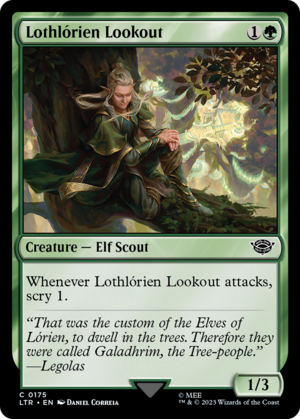
Card Details
Lothlórien Lookout #175 Creature — Elf Scout
Info
| Color: | |
| Identifies: | |
| Cost: |
|
| Rarity: | Common |
| Converted Cost: | 2 |
| Power/Toughness: | 1/3 |
| Types: | |
| SubTypes: | |
| Languages: |
|
| Layout: | Normal |
| Rank: | |
| Saltiness: |
Abilities/Keywords
Rules
Prices
Legalities
Modern
Competitivebrawl
Brawl
Historic
Oldschool
Standard
Alchemy
Pioneer
Legacy
Duel
Pauper
Predh
Commander
Timeless
Vintage
Penny
Oathbreaker
Paupercommander
Future
Standardbrawl
Gladiator
Premodern
Text
Whenever this creature attacks, scry 1.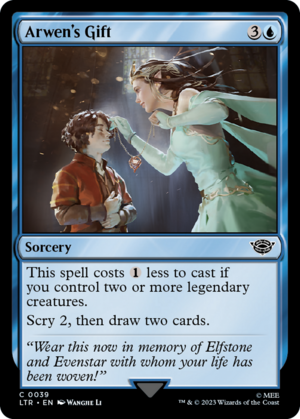
Card Details
Arwen's Gift #39 Sorcery
Info
| Color: | |
| Identifies: | |
| Cost: |
|
| Rarity: | Common |
| Converted Cost: | 4 |
| Power/Toughness: | / |
| Types: | |
| SubTypes: | |
| Languages: |
|
| Layout: | Normal |
| Rank: | |
| Saltiness: |
Abilities/Keywords
Rules
Prices
Legalities
Modern
Competitivebrawl
Brawl
Historic
Oldschool
Standard
Alchemy
Pioneer
Legacy
Duel
Pauper
Predh
Commander
Timeless
Vintage
Penny
Oathbreaker
Paupercommander
Future
Standardbrawl
Gladiator
Premodern
Text
This spell costs less to cast if you control two or more legendary creatures.
Scry 2, then draw two cards. 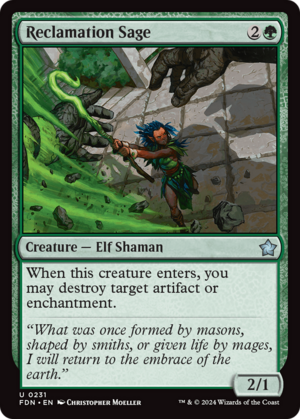
Card Details
Reclamation Sage #231 Creature — Elf Shaman
Info
| Color: | |
| Identifies: | |
| Cost: |
|
| Rarity: | Uncommon |
| Converted Cost: | 3 |
| Power/Toughness: | 2/1 |
| Types: | |
| SubTypes: | |
| Languages: |
|
| Layout: | Normal |
| Rank: | |
| Saltiness: |
Rules
Prices
Legalities
Modern
Competitivebrawl
Brawl
Historic
Oldschool
Standard
Alchemy
Pioneer
Legacy
Duel
Pauper
Predh
Commander
Timeless
Vintage
Penny
Oathbreaker
Paupercommander
Future
Standardbrawl
Gladiator
Premodern
Text
When this creature enters, you maydestroytarget artifact or enchantment.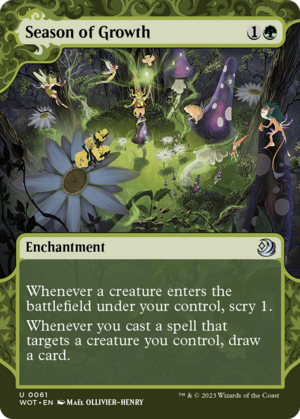
Card Details
Season of Growth #61 Enchantment
Info
| Color: | |
| Identifies: | |
| Cost: |
|
| Rarity: | Uncommon |
| Converted Cost: | 2 |
| Power/Toughness: | / |
| Types: | |
| SubTypes: | |
| Languages: |
|
| Layout: | Normal |
| Rank: | |
| Saltiness: |
Abilities/Keywords
Rules
Prices
Legalities
Modern
Competitivebrawl
Brawl
Historic
Oldschool
Standard
Alchemy
Pioneer
Legacy
Duel
Pauper
Predh
Commander
Timeless
Vintage
Penny
Oathbreaker
Paupercommander
Future
Standardbrawl
Gladiator
Premodern
Text
Whenever a creature you control enters, scry 1. (Look at the top card of your library. You may put that card on the bottom.) Whenever you cast a spell that targets a creature you control, draw a card.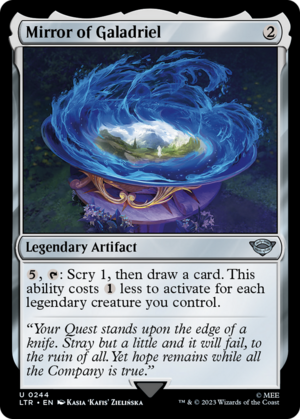
Card Details
Mirror of Galadriel #244 Legendary Artifact
Info
| Color: | |
| Identifies: | |
| Cost: |
|
| Rarity: | Uncommon |
| Converted Cost: | 2 |
| Power/Toughness: | / |
| Types: | |
| SubTypes: | |
| Languages: |
|
| Layout: | Normal |
| Rank: | |
| Saltiness: |
Abilities/Keywords
Rules
Prices
Legalities
Modern
Competitivebrawl
Brawl
Historic
Oldschool
Standard
Alchemy
Pioneer
Legacy
Duel
Pauper
Predh
Commander
Timeless
Vintage
Penny
Oathbreaker
Paupercommander
Future
Standardbrawl
Gladiator
Premodern
Text
 , : Scry 1, then draw a card. This ability costs less to activate for each legendary creature you control.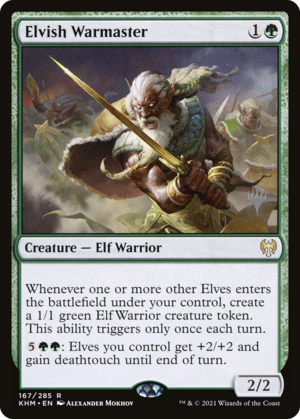
Card Details
Elvish Warmaster #167p Creature — Elf Warrior
Info
| Color: | |
| Identifies: | |
| Cost: |
|
| Rarity: | Rare |
| Converted Cost: | 2 |
| Power/Toughness: | 2/2 |
| Types: | |
| SubTypes: | |
| Languages: |
|
| Layout: | Normal |
| Rank: | |
| Saltiness: | |
| Tokens: |
Rules
Prices
Legalities
Modern
Competitivebrawl
Brawl
Historic
Oldschool
Standard
Alchemy
Pioneer
Legacy
Duel
Pauper
Predh
Commander
Timeless
Vintage
Penny
Oathbreaker
Paupercommander
Future
Standardbrawl
Gladiator
Premodern
Text
Whenever one or more other Elves you control enter, create a 1/1 green Elf Warrior creature token. This ability triggers only once each turn.: Elves you control get +2/+2 and gain deathtouch until end of turn. Less Synergy
Card Details
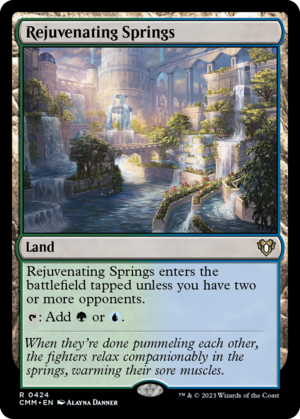
Rejuvenating Springs #424 Land
Info
| Color: | |
| Identifies: | |
| Cost: | |
| Rarity: | Rare |
| Converted Cost: | 0 |
| Power/Toughness: | / |
| Types: | |
| SubTypes: | |
| Languages: |
|
| Layout: | Normal |
| Rank: | |
| Saltiness: |
Rules
Prices
Legalities
Modern
Competitivebrawl
Brawl
Historic
Oldschool
Standard
Alchemy
Pioneer
Legacy
Duel
Pauper
Predh
Commander
Timeless
Vintage
Penny
Oathbreaker
Paupercommander
Future
Standardbrawl
Gladiator
Premodern
Text
This land enters tapped unless you have two or more opponents.: Add or . 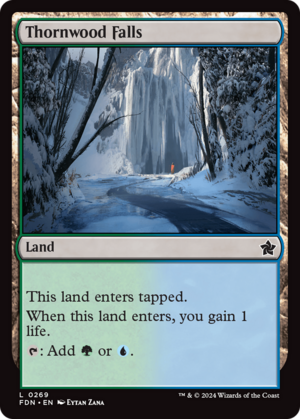
Card Details
Thornwood Falls #269 Land
Info
| Color: | |
| Identifies: | |
| Cost: | |
| Rarity: | Common |
| Converted Cost: | 0 |
| Power/Toughness: | / |
| Types: | |
| SubTypes: | |
| Languages: |
|
| Layout: | Normal |
| Rank: | |
| Saltiness: |
Rules
Prices
Legalities
Modern
Competitivebrawl
Brawl
Historic
Oldschool
Standard
Alchemy
Pioneer
Legacy
Duel
Pauper
Predh
Commander
Timeless
Vintage
Penny
Oathbreaker
Paupercommander
Future
Standardbrawl
Gladiator
Premodern
Text
This land enters tapped. When this land enters, you gain 1 life.: Add or . 
Card Details
Heroic Intervention #730 Instant
Info
| Color: | |
| Identifies: | |
| Cost: |
|
| Rarity: | Rare |
| Converted Cost: | 2 |
| Power/Toughness: | / |
| Types: | |
| SubTypes: | |
| Languages: |
|
| Layout: | Normal |
| Rank: | |
| Saltiness: |
Rules
Prices
Legalities
Modern
Competitivebrawl
Brawl
Historic
Oldschool
Standard
Alchemy
Pioneer
Legacy
Duel
Pauper
Predh
Commander
Timeless
Vintage
Penny
Oathbreaker
Paupercommander
Future
Standardbrawl
Gladiator
Premodern
Text
Permanents you control gain hexproof and indestructible until end of turn.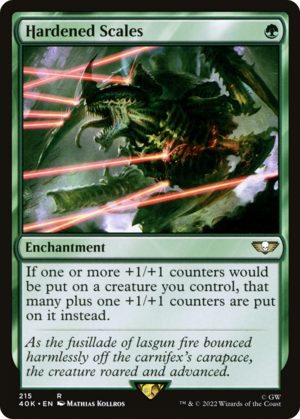
Card Details
Hardened Scales #215 Enchantment
Info
| Color: | |
| Identifies: | |
| Cost: |
|
| Rarity: | Rare |
| Converted Cost: | 1 |
| Power/Toughness: | / |
| Types: | |
| SubTypes: | |
| Languages: |
|
| Layout: | Normal |
| Rank: | |
| Saltiness: |
Rules
Prices
Legalities
Modern
Competitivebrawl
Brawl
Historic
Oldschool
Standard
Alchemy
Pioneer
Legacy
Duel
Pauper
Predh
Commander
Timeless
Vintage
Penny
Oathbreaker
Paupercommander
Future
Standardbrawl
Gladiator
Premodern
Text
If one or more +1/+1 counters would be put on a creature you control, that many plus one +1/+1 counters are put on it instead.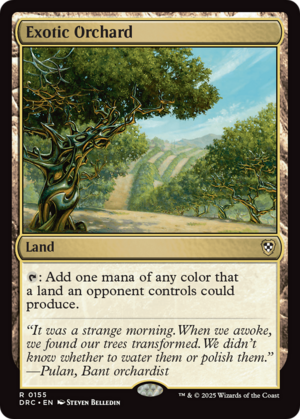
Card Details
Exotic Orchard #155 Land
Info
| Color: | |
| Identifies: | |
| Cost: | |
| Rarity: | Rare |
| Converted Cost: | 0 |
| Power/Toughness: | / |
| Types: | |
| SubTypes: | |
| Languages: |
|
| Layout: | Normal |
| Rank: | |
| Saltiness: |
Rules
Legalities
Modern
Competitivebrawl
Brawl
Historic
Oldschool
Standard
Alchemy
Pioneer
Legacy
Duel
Pauper
Predh
Commander
Timeless
Vintage
Penny
Oathbreaker
Paupercommander
Future
Standardbrawl
Gladiator
Premodern
Text
: Add one mana of any color that a land an opponent controls could produce. 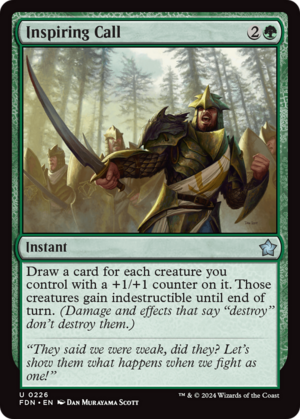
Card Details
Inspiring Call #226 Instant
Info
| Color: | |
| Identifies: | |
| Cost: |
|
| Rarity: | Uncommon |
| Converted Cost: | 3 |
| Power/Toughness: | / |
| Types: | |
| SubTypes: | |
| Languages: |
|
| Layout: | Normal |
| Rank: | |
| Saltiness: |
Rules
Prices
Legalities
Modern
Competitivebrawl
Brawl
Historic
Oldschool
Standard
Alchemy
Pioneer
Legacy
Duel
Pauper
Predh
Commander
Timeless
Vintage
Penny
Oathbreaker
Paupercommander
Future
Standardbrawl
Gladiator
Premodern
Text
Draw a card for each creature you control with a +1/+1counteron it. Those creatures gain indestructible until end of turn. (Damage and effects that say "destroy" don'tdestroythem.)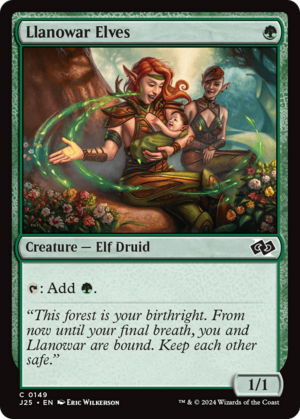
Card Details
Llanowar Elves #149 Creature — Elf Druid
Info
| Color: | |
| Identifies: | |
| Cost: |
|
| Rarity: | Common |
| Converted Cost: | 1 |
| Power/Toughness: | 1/1 |
| Types: | |
| SubTypes: | |
| Languages: |
|
| Layout: | Normal |
| Rank: | |
| Saltiness: |
Rules
Legalities
Modern
Competitivebrawl
Brawl
Historic
Oldschool
Standard
Alchemy
Pioneer
Legacy
Duel
Pauper
Predh
Commander
Timeless
Vintage
Penny
Oathbreaker
Paupercommander
Future
Standardbrawl
Gladiator
Premodern
Text
: Add . 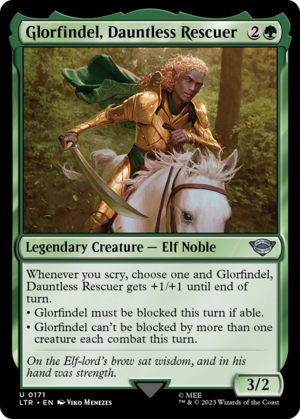
Card Details
Glorfindel, Dauntless Rescuer #171 Legendary Creature — Elf Noble
Info
| Color: | |
| Identifies: | |
| Cost: |
|
| Rarity: | Uncommon |
| Converted Cost: | 3 |
| Power/Toughness: | 3/2 |
| Types: | |
| SubTypes: | |
| Languages: |
|
| Layout: | Normal |
| Rank: | |
| Saltiness: |
Rules
Prices
Legalities
Modern
Competitivebrawl
Brawl
Historic
Oldschool
Standard
Alchemy
Pioneer
Legacy
Duel
Pauper
Predh
Commander
Timeless
Vintage
Penny
Oathbreaker
Paupercommander
Future
Standardbrawl
Gladiator
Premodern
Text
Whenever you scry, choose one and Glorfindel gets +1/+1 until end of turn. • Glorfindel must be blocked this turn if able. • Glorfindel can't be blocked by more than one creature each combat this turn.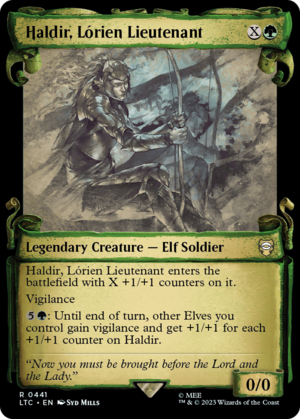
Card Details
Haldir, Lórien Lieutenant #441 Legendary Creature — Elf Soldier
Info
| Color: | |
| Identifies: | |
| Cost: |
 |
| Rarity: | Rare |
| Converted Cost: | 1 |
| Power/Toughness: | 0/0 |
| Types: | |
| SubTypes: | |
| Languages: |
|
| Layout: | Normal |
| Rank: | |
| Saltiness: |
Abilities/Keywords
Rules
Prices
Legalities
Modern
Competitivebrawl
Brawl
Historic
Oldschool
Standard
Alchemy
Pioneer
Legacy
Duel
Pauper
Predh
Commander
Timeless
Vintage
Penny
Oathbreaker
Paupercommander
Future
Standardbrawl
Gladiator
Premodern
Text
Haldir enters with X +1/+1 counters on it. Vigilance: Until end of turn, other Elves you control gain vigilance and get +1/+1 for each +1/+1counteron Haldir. 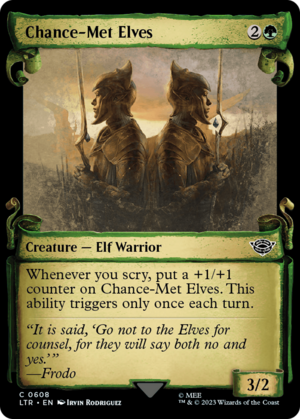
Card Details
Chance-Met Elves #608 Creature — Elf Warrior
Info
| Color: | |
| Identifies: | |
| Cost: |
|
| Rarity: | Common |
| Converted Cost: | 3 |
| Power/Toughness: | 3/2 |
| Types: | |
| SubTypes: | |
| Languages: |
|
| Layout: | Normal |
| Rank: | |
| Saltiness: |
Rules
Prices
Legalities
Modern
Competitivebrawl
Brawl
Historic
Oldschool
Standard
Alchemy
Pioneer
Legacy
Duel
Pauper
Predh
Commander
Timeless
Vintage
Penny
Oathbreaker
Paupercommander
Future
Standardbrawl
Gladiator
Premodern
Text
Whenever you scry, put a +1/+1counteron this creature. This ability triggers only once each turn.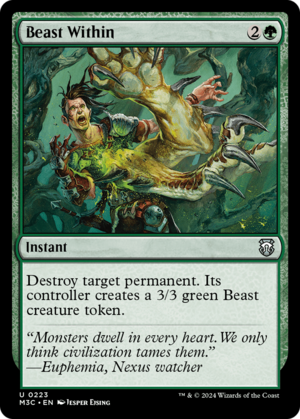
Card Details
Beast Within #223 Instant
Info
| Color: | |
| Identifies: | |
| Cost: |
|
| Rarity: | Uncommon |
| Converted Cost: | 3 |
| Power/Toughness: | / |
| Types: | |
| SubTypes: | |
| Languages: |
|
| Layout: | Normal |
| Rank: | |
| Saltiness: | |
| Tokens: |
Rules
Prices
Legalities
Modern
Competitivebrawl
Brawl
Historic
Oldschool
Standard
Alchemy
Pioneer
Legacy
Duel
Pauper
Predh
Commander
Timeless
Vintage
Penny
Oathbreaker
Paupercommander
Future
Standardbrawl
Gladiator
Premodern
Text
Destroy target permanent. Its controller creates a 3/3 green Beast creature token.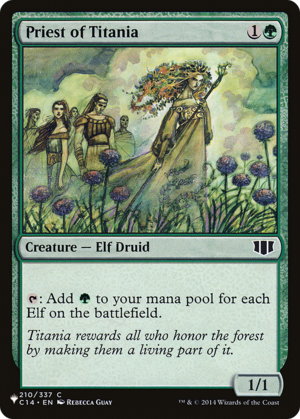
Card Details
Priest of Titania #C14-210 Creature — Elf Druid
Info
| Color: | |
| Identifies: | |
| Cost: |
|
| Rarity: | Common |
| Converted Cost: | 2 |
| Power/Toughness: | 1/1 |
| Types: | |
| SubTypes: | |
| Languages: |
|
| Layout: | Normal |
| Rank: | |
| Saltiness: |
Rules
Legalities
Modern
Competitivebrawl
Brawl
Historic
Oldschool
Standard
Alchemy
Pioneer
Legacy
Duel
Pauper
Predh
Commander
Timeless
Vintage
Penny
Oathbreaker
Paupercommander
Future
Standardbrawl
Gladiator
Premodern
Text
: Add for each Elf on the battlefield. 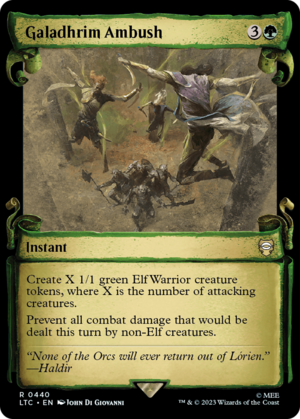
Card Details
Galadhrim Ambush #440 Instant
Info
| Color: | |
| Identifies: | |
| Cost: |
|
| Rarity: | Rare |
| Converted Cost: | 4 |
| Power/Toughness: | / |
| Types: | |
| SubTypes: | |
| Languages: |
|
| Layout: | Normal |
| Rank: | |
| Saltiness: | |
| Tokens: |
Rules
Prices
Legalities
Modern
Competitivebrawl
Brawl
Historic
Oldschool
Standard
Alchemy
Pioneer
Legacy
Duel
Pauper
Predh
Commander
Timeless
Vintage
Penny
Oathbreaker
Paupercommander
Future
Standardbrawl
Gladiator
Premodern
Text
Create X 1/1 green Elf Warrior creature tokens, where X is the number of attacking creatures. Prevent all combat damage that would be dealt this turn by non-Elf creatures.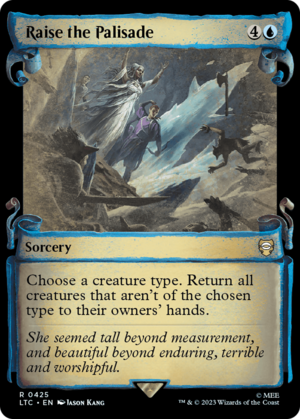
Card Details
Raise the Palisade #425 Sorcery
Info
| Color: | |
| Identifies: | |
| Cost: |
 |
| Rarity: | Rare |
| Converted Cost: | 5 |
| Power/Toughness: | / |
| Types: | |
| SubTypes: | |
| Languages: |
|
| Layout: | Normal |
| Rank: | |
| Saltiness: |
Rules
Prices
Legalities
Modern
Competitivebrawl
Brawl
Historic
Oldschool
Standard
Alchemy
Pioneer
Legacy
Duel
Pauper
Predh
Commander
Timeless
Vintage
Penny
Oathbreaker
Paupercommander
Future
Standardbrawl
Gladiator
Premodern
Text
Choose a creature type. Return all creatures that aren't of the chosen type to their owners' hands.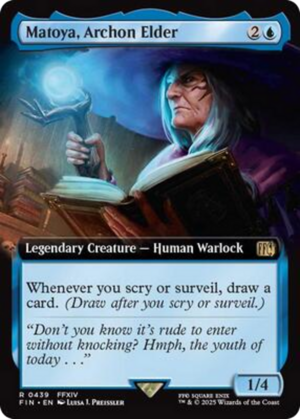
Card Details
Matoya, Archon Elder #439 Legendary Creature — Human Warlock
Info
| Color: | |
| Identifies: | |
| Cost: |
|
| Rarity: | Rare |
| Converted Cost: | 3 |
| Power/Toughness: | 1/4 |
| Types: | |
| SubTypes: | |
| Languages: |
|
| Layout: | Normal |
| Rank: | |
| Saltiness: |
Rules
Prices
Legalities
Modern
Competitivebrawl
Brawl
Historic
Oldschool
Standard
Alchemy
Pioneer
Legacy
Duel
Pauper
Predh
Commander
Timeless
Vintage
Penny
Oathbreaker
Paupercommander
Future
Standardbrawl
Gladiator
Premodern
Text
Whenever you scry or surveil, draw a card. (Draw after you scry or surveil.)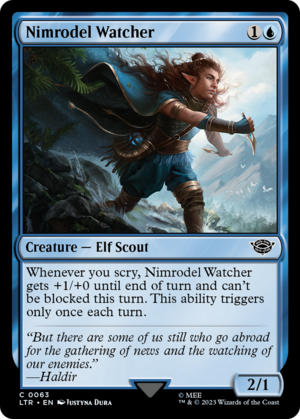
Card Details
Nimrodel Watcher #63 Creature — Elf Scout
Info
| Color: | |
| Identifies: | |
| Cost: |
|
| Rarity: | Common |
| Converted Cost: | 2 |
| Power/Toughness: | 2/1 |
| Types: | |
| SubTypes: | |
| Languages: |
|
| Layout: | Normal |
| Rank: | |
| Saltiness: |
Rules
Prices
Legalities
Modern
Competitivebrawl
Brawl
Historic
Oldschool
Standard
Alchemy
Pioneer
Legacy
Duel
Pauper
Predh
Commander
Timeless
Vintage
Penny
Oathbreaker
Paupercommander
Future
Standardbrawl
Gladiator
Premodern
Text
Whenever you scry, this creature gets +1/+0 until end of turn and can't be blocked this turn. This ability triggers only once each turn.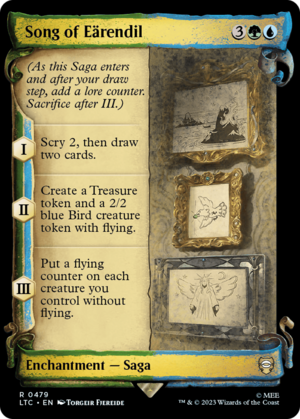
Card Details
Song of Eärendil #479 Enchantment — Saga
Info
Abilities/Keywords
Rules
Prices
Legalities
Modern
Competitivebrawl
Brawl
Historic
Oldschool
Standard
Alchemy
Pioneer
Legacy
Duel
Pauper
Predh
Commander
Timeless
Vintage
Penny
Oathbreaker
Paupercommander
Future
Standardbrawl
Gladiator
Premodern
Text
(As this Saga enters and after your draw step, add a lorecounterSacrificeafter III.) I — Scry 2, then draw two cards. II — Create a Treasure token and a 2/2 blue Bird creature token with flying. III — Put a flyingcounteron each creature you control without flying.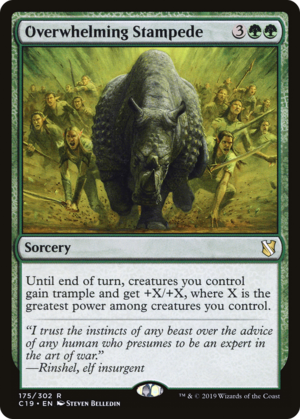
Card Details
Overwhelming Stampede #175 Sorcery
Info
| Color: | |
| Identifies: | |
| Cost: |
|
| Rarity: | Rare |
| Converted Cost: | 5 |
| Power/Toughness: | / |
| Types: | |
| SubTypes: | |
| Languages: |
|
| Layout: | Normal |
| Rank: | |
| Saltiness: |
Rules
Legalities
Modern
Competitivebrawl
Brawl
Historic
Oldschool
Standard
Alchemy
Pioneer
Legacy
Duel
Pauper
Predh
Commander
Timeless
Vintage
Penny
Oathbreaker
Paupercommander
Future
Standardbrawl
Gladiator
Premodern
Text
Until end of turn, creatures you control gain trample and get +X/+X, where X is the greatest power among creatures you control.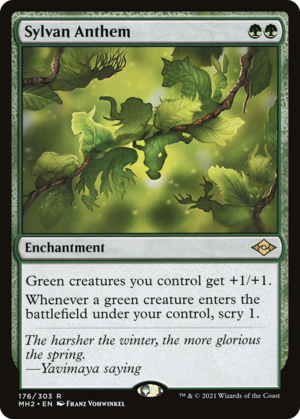
Card Details
Sylvan Anthem #176 Enchantment
Info
| Color: | |
| Identifies: | |
| Cost: |
|
| Rarity: | Rare |
| Converted Cost: | 2 |
| Power/Toughness: | / |
| Types: | |
| SubTypes: | |
| Languages: |
|
| Layout: | Normal |
| Rank: | |
| Saltiness: |
Abilities/Keywords
Rules
Prices
Legalities
Modern
Competitivebrawl
Brawl
Historic
Oldschool
Standard
Alchemy
Pioneer
Legacy
Duel
Pauper
Predh
Commander
Timeless
Vintage
Penny
Oathbreaker
Paupercommander
Future
Standardbrawl
Gladiator
Premodern
Text
Green creatures you control get +1/+1. Whenever a green creature you control enters, scry 1.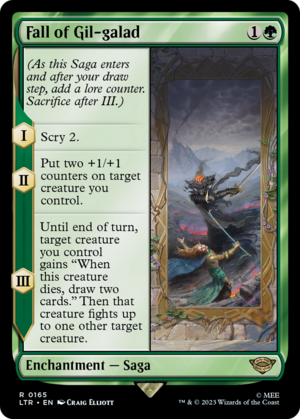
Card Details
Fall of Gil-galad #165 Enchantment — Saga
Info
| Color: | |
| Identifies: | |
| Cost: |
|
| Rarity: | Rare |
| Converted Cost: | 2 |
| Power/Toughness: | / |
| Types: | |
| SubTypes: | |
| Languages: |
|
| Layout: | Saga |
| Rank: | |
| Saltiness: |
Abilities/Keywords
Rules
Prices
Legalities
Modern
Competitivebrawl
Brawl
Historic
Oldschool
Standard
Alchemy
Pioneer
Legacy
Duel
Pauper
Predh
Commander
Timeless
Vintage
Penny
Oathbreaker
Paupercommander
Future
Standardbrawl
Gladiator
Premodern
Text
(As this Saga enters and after your draw step, add a lorecounterSacrificeafter III.) I — Scry 2. II — Put two +1/+1 counters on target creature you control. III — Until end of turn, target creature you control gains "When this creature dies, draw two cards." Then that creature fights up to one other target creature.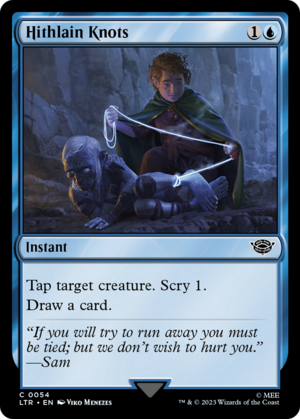
Card Details
Hithlain Knots #54 Instant
Info
| Color: | |
| Identifies: | |
| Cost: |
|
| Rarity: | Common |
| Converted Cost: | 2 |
| Power/Toughness: | / |
| Types: | |
| SubTypes: | |
| Languages: |
|
| Layout: | Normal |
| Rank: | |
| Saltiness: |
Abilities/Keywords
Rules
Prices
Legalities
Modern
Competitivebrawl
Brawl
Historic
Oldschool
Standard
Alchemy
Pioneer
Legacy
Duel
Pauper
Predh
Commander
Timeless
Vintage
Penny
Oathbreaker
Paupercommander
Future
Standardbrawl
Gladiator
Premodern
Text
Tap target creature. Scry 1. Draw a card.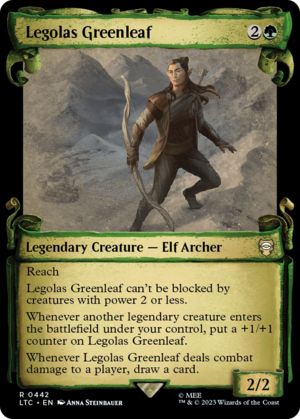
Card Details
Legolas Greenleaf #442 Legendary Creature — Elf Archer
Info
| Color: | |
| Identifies: | |
| Cost: |
|
| Rarity: | Rare |
| Converted Cost: | 3 |
| Power/Toughness: | 2/2 |
| Types: | |
| SubTypes: | |
| Languages: |
|
| Layout: | Normal |
| Rank: | |
| Saltiness: |
Abilities/Keywords
Rules
Prices
Legalities
Modern
Competitivebrawl
Brawl
Historic
Oldschool
Standard
Alchemy
Pioneer
Legacy
Duel
Pauper
Predh
Commander
Timeless
Vintage
Penny
Oathbreaker
Paupercommander
Future
Standardbrawl
Gladiator
Premodern
Text
Reach Legolas can't be blocked by creatures with power 2 or less. Whenever another legendary creature you control enters, put a +1/+1counteron Legolas. Whenever Legolas deals combat damage to a player, draw a card.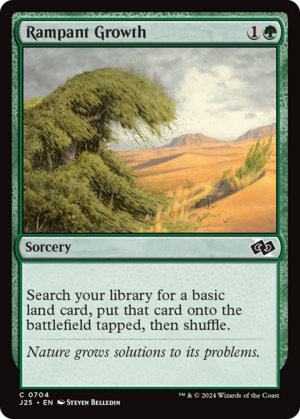
Card Details
Rampant Growth #704 Sorcery
Info
| Color: | |
| Identifies: | |
| Cost: |
|
| Rarity: | Common |
| Converted Cost: | 2 |
| Power/Toughness: | / |
| Types: | |
| SubTypes: | |
| Languages: |
|
| Layout: | Normal |
| Rank: | |
| Saltiness: |
Rules
Legalities
Modern
Competitivebrawl
Brawl
Historic
Oldschool
Standard
Alchemy
Pioneer
Legacy
Duel
Pauper
Predh
Commander
Timeless
Vintage
Penny
Oathbreaker
Paupercommander
Future
Standardbrawl
Gladiator
Premodern
Text
Search your library for a basic land card, put that card onto the battlefield tapped, thenshuffle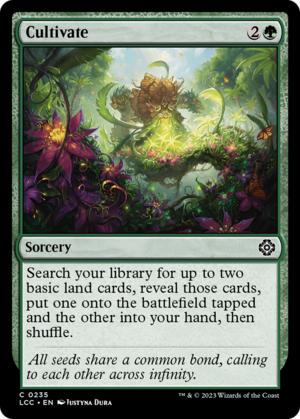
Card Details
Cultivate #235 Sorcery
Info
| Color: | |
| Identifies: | |
| Cost: |
|
| Rarity: | Common |
| Converted Cost: | 3 |
| Power/Toughness: | / |
| Types: | |
| SubTypes: | |
| Languages: |
|
| Layout: | Normal |
| Rank: | |
| Saltiness: |
Rules
Legalities
Modern
Competitivebrawl
Brawl
Historic
Oldschool
Standard
Alchemy
Pioneer
Legacy
Duel
Pauper
Predh
Commander
Timeless
Vintage
Penny
Oathbreaker
Paupercommander
Future
Standardbrawl
Gladiator
Premodern
Text
Search your library for up to two basic land cards, reveal those cards, put one onto the battlefield tapped and the other into your hand, thenshuffle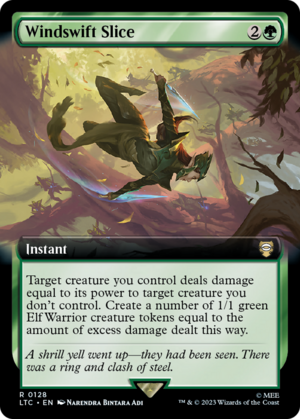
Card Details
Windswift Slice #128 Instant
Info
| Color: | |
| Identifies: | |
| Cost: |
|
| Rarity: | Rare |
| Converted Cost: | 3 |
| Power/Toughness: | / |
| Types: | |
| SubTypes: | |
| Languages: |
|
| Layout: | Normal |
| Rank: | |
| Saltiness: | |
| Tokens: |
Rules
Legalities
Modern
Competitivebrawl
Brawl
Historic
Oldschool
Standard
Alchemy
Pioneer
Legacy
Duel
Pauper
Predh
Commander
Timeless
Vintage
Penny
Oathbreaker
Paupercommander
Future
Standardbrawl
Gladiator
Premodern
Text
Target creature you control deals damage equal to its power to target creature you don't control. Create a number of 1/1 green Elf Warrior creature tokens equal to the amount of excess damage dealt this way.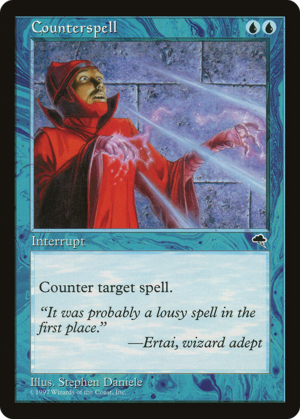
Card Details
Counterspell #57 Instant
Info
| Color: | |
| Identifies: | |
| Cost: |
|
| Rarity: | Common |
| Converted Cost: | 2 |
| Power/Toughness: | / |
| Types: | |
| SubTypes: | |
| Languages: |
|
| Layout: | Normal |
| Rank: | |
| Saltiness: |
Rules
Legalities
Modern
Competitivebrawl
Brawl
Historic
Oldschool
Standard
Alchemy
Pioneer
Legacy
Duel
Pauper
Predh
Commander
Timeless
Vintage
Penny
Oathbreaker
Paupercommander
Future
Standardbrawl
Gladiator
Premodern
Text
Counter target spell.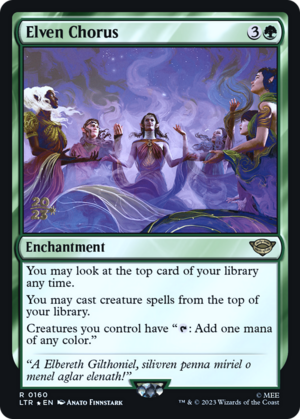
Card Details
Elven Chorus #160s Enchantment
Info
| Color: | |
| Identifies: | |
| Cost: |
|
| Rarity: | Rare |
| Converted Cost: | 4 |
| Power/Toughness: | / |
| Types: | |
| SubTypes: | |
| Languages: |
|
| Layout: | Normal |
| Rank: | |
| Saltiness: |
Rules
Legalities
Modern
Competitivebrawl
Brawl
Historic
Oldschool
Standard
Alchemy
Pioneer
Legacy
Duel
Pauper
Predh
Commander
Timeless
Vintage
Penny
Oathbreaker
Paupercommander
Future
Standardbrawl
Gladiator
Premodern
Text
You may look at the top card of your library any time. You may cast creature spells from the top of your library. Creatures you control have ": Add one mana of any color." 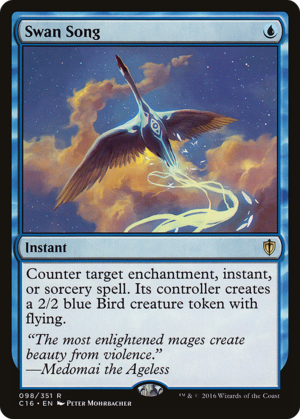
Card Details
Swan Song #98 Instant
Info
| Color: | |
| Identifies: | |
| Cost: |
|
| Rarity: | Rare |
| Converted Cost: | 1 |
| Power/Toughness: | / |
| Types: | |
| SubTypes: | |
| Languages: |
|
| Layout: | Normal |
| Rank: | |
| Saltiness: | |
| Tokens: |
Rules
Prices
Legalities
Modern
Competitivebrawl
Brawl
Historic
Oldschool
Standard
Alchemy
Pioneer
Legacy
Duel
Pauper
Predh
Commander
Timeless
Vintage
Penny
Oathbreaker
Paupercommander
Future
Standardbrawl
Gladiator
Premodern
Text
Counter target enchantment, instant, or sorcery spell. Its controller creates a 2/2 blue Bird creature token with flying.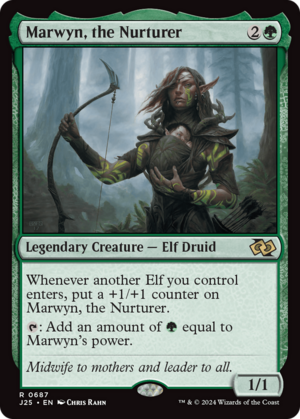
Card Details
Marwyn, the Nurturer #687 Legendary Creature — Elf Druid
Info
| Color: | |
| Identifies: | |
| Cost: |
|
| Rarity: | Rare |
| Converted Cost: | 3 |
| Power/Toughness: | 1/1 |
| Types: | |
| SubTypes: | |
| Languages: |
|
| Layout: | Normal |
| Rank: | |
| Saltiness: |
Rules
Legalities
Modern
Competitivebrawl
Brawl
Historic
Oldschool
Standard
Alchemy
Pioneer
Legacy
Duel
Pauper
Predh
Commander
Timeless
Vintage
Penny
Oathbreaker
Paupercommander
Future
Standardbrawl
Gladiator
Premodern
Text
Whenever another Elf you control enters, put a +1/+1counteron Marwyn.: Add an amount of equal to Marwyn's power. 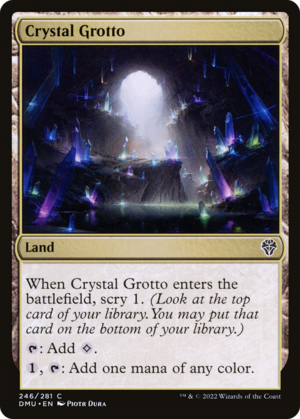
Card Details
Crystal Grotto #246 Land
Info
| Color: | |
| Identifies: | |
| Cost: | |
| Rarity: | Common |
| Converted Cost: | 0 |
| Power/Toughness: | / |
| Types: | |
| SubTypes: | |
| Languages: |
|
| Layout: | Normal |
| Rank: | |
| Saltiness: |
Abilities/Keywords
Rules
Prices
Legalities
Modern
Competitivebrawl
Brawl
Historic
Oldschool
Standard
Alchemy
Pioneer
Legacy
Duel
Pauper
Predh
Commander
Timeless
Vintage
Penny
Oathbreaker
Paupercommander
Future
Standardbrawl
Gladiator
Premodern
Text
When this land enters, scry 1.: Add .
, : Add one mana of any color. 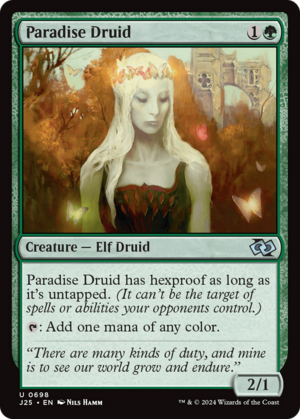
Card Details
Paradise Druid #698 Creature — Elf Druid
Info
| Color: | |
| Identifies: | |
| Cost: |
|
| Rarity: | Uncommon |
| Converted Cost: | 2 |
| Power/Toughness: | 2/1 |
| Types: | |
| SubTypes: | |
| Languages: |
|
| Layout: | Normal |
| Rank: | |
| Saltiness: |
Rules
Legalities
Modern
Competitivebrawl
Brawl
Historic
Oldschool
Standard
Alchemy
Pioneer
Legacy
Duel
Pauper
Predh
Commander
Timeless
Vintage
Penny
Oathbreaker
Paupercommander
Future
Standardbrawl
Gladiator
Premodern
Text
This creature has hexproof as long as it's untapped. (It can't be the target of spells or abilities your opponents control.): Add one mana of any color. 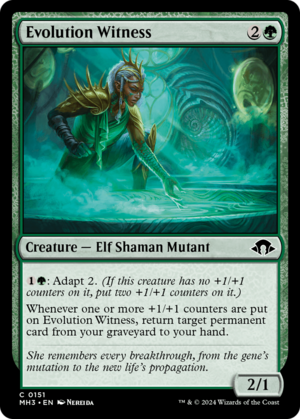
Card Details
Evolution Witness #151 Creature — Elf Shaman Mutant
Info
| Color: | |
| Identifies: | |
| Cost: |
|
| Rarity: | Common |
| Converted Cost: | 3 |
| Power/Toughness: | 2/1 |
| Types: | |
| SubTypes: | |
| Languages: |
|
| Layout: | Normal |
| Rank: | |
| Saltiness: |
Abilities/Keywords
Rules
Prices
Legalities
Modern
Competitivebrawl
Brawl
Historic
Oldschool
Standard
Alchemy
Pioneer
Legacy
Duel
Pauper
Predh
Commander
Timeless
Vintage
Penny
Oathbreaker
Paupercommander
Future
Standardbrawl
Gladiator
Premodern
Text
: Adapt 2. (If this creature has no +1/+1 counters on it, put two +1/+1 counters on it.)
Whenever one or more +1/+1 counters are put on this creature, return target permanent card from your graveyard to your hand. 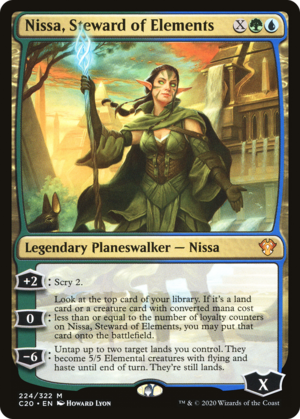
Card Details
Nissa, Steward of Elements #224 Legendary Planeswalker — Nissa
Info
| Color: | |
| Identifies: | |
| Cost: |
|
| Rarity: | Mythic |
| Converted Cost: | 2 |
| Power/Toughness: | / |
| Types: | |
| SubTypes: | |
| Languages: |
|
| Layout: | Normal |
| Rank: | |
| Saltiness: |
Abilities/Keywords
Rules
Legalities
Modern
Competitivebrawl
Brawl
Historic
Oldschool
Standard
Alchemy
Pioneer
Legacy
Duel
Pauper
Predh
Commander
Timeless
Vintage
Penny
Oathbreaker
Paupercommander
Future
Standardbrawl
Gladiator
Premodern
Text
+2 Scry 2.
0 Look at the top card of your library. If it's a land card or a creature card with mana value less than or equal to the number of loyalty counters on Nissa, you may put that card onto the battlefield.
−6 Untap up to two target lands you control. They become 5/5 Elemental creatures with flying and haste until end of turn. They're still lands.
Card Details
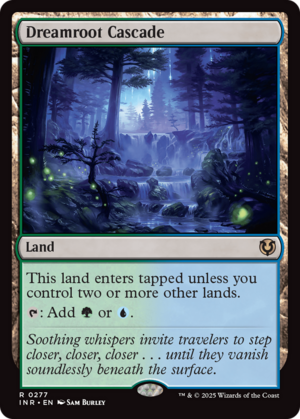
Dreamroot Cascade #277 Land
Info
| Color: | |
| Identifies: | |
| Cost: | |
| Rarity: | Rare |
| Converted Cost: | 0 |
| Power/Toughness: | / |
| Types: | |
| SubTypes: | |
| Languages: |
|
| Layout: | Normal |
| Rank: | |
| Saltiness: |
Rules
Prices
Legalities
Modern
Competitivebrawl
Brawl
Historic
Oldschool
Standard
Alchemy
Pioneer
Legacy
Duel
Pauper
Predh
Commander
Timeless
Vintage
Penny
Oathbreaker
Paupercommander
Future
Standardbrawl
Gladiator
Premodern
Text
This land enters tapped unless you control two or more other lands.: Add or . 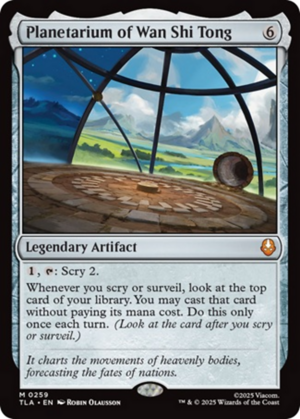
Card Details
Planetarium of Wan Shi Tong #259 Legendary Artifact
Info
| Color: | |
| Identifies: | |
| Cost: |
 |
| Rarity: | Mythic |
| Converted Cost: | 6 |
| Power/Toughness: | / |
| Types: | |
| SubTypes: | |
| Languages: |
|
| Layout: | Normal |
| Rank: | |
| Saltiness: |
Abilities/Keywords
Rules
Prices
Legalities
Modern
Competitivebrawl
Brawl
Historic
Oldschool
Standard
Alchemy
Pioneer
Legacy
Duel
Pauper
Predh
Commander
Timeless
Vintage
Penny
Oathbreaker
Paupercommander
Future
Standardbrawl
Gladiator
Premodern
Text
, : Scry 2.
Whenever you scry or surveil, look at the top card of your library. You may cast that card without paying its mana cost. Do this only once each turn. (Look at the card after you scry or surveil.) 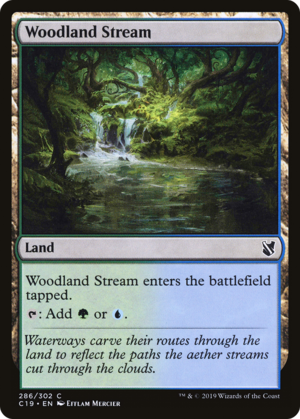
Card Details
Woodland Stream #286 Land
Info
| Color: | |
| Identifies: | |
| Cost: | |
| Rarity: | Common |
| Converted Cost: | 0 |
| Power/Toughness: | / |
| Types: | |
| SubTypes: | |
| Languages: |
|
| Layout: | Normal |
| Rank: | |
| Saltiness: |
Rules
Legalities
Modern
Competitivebrawl
Brawl
Historic
Oldschool
Standard
Alchemy
Pioneer
Legacy
Duel
Pauper
Predh
Commander
Timeless
Vintage
Penny
Oathbreaker
Paupercommander
Future
Standardbrawl
Gladiator
Premodern
Text
This land enters tapped.: Add or . 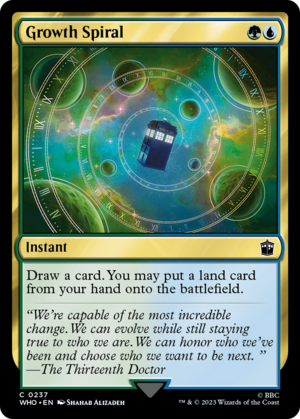
Card Details
Growth Spiral #237 Instant
Info
| Color: | |
| Identifies: | |
| Cost: |
|
| Rarity: | Common |
| Converted Cost: | 2 |
| Power/Toughness: | / |
| Types: | |
| SubTypes: | |
| Languages: |
|
| Layout: | Normal |
| Rank: | |
| Saltiness: |
Rules
Prices
Legalities
Modern
Competitivebrawl
Brawl
Historic
Oldschool
Standard
Alchemy
Pioneer
Legacy
Duel
Pauper
Predh
Commander
Timeless
Vintage
Penny
Oathbreaker
Paupercommander
Future
Standardbrawl
Gladiator
Premodern
Text
Draw a card. You may put a land card from your hand onto the battlefield.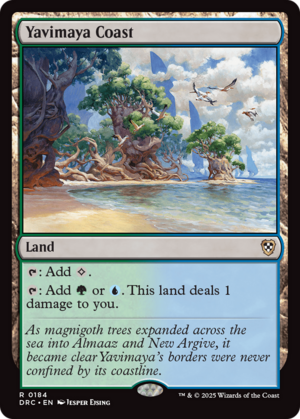
Card Details
Yavimaya Coast #184 Land
Info
| Color: | |
| Identifies: | |
| Cost: | |
| Rarity: | Rare |
| Converted Cost: | 0 |
| Power/Toughness: | / |
| Types: | |
| SubTypes: | |
| Languages: |
|
| Layout: | Normal |
| Rank: | |
| Saltiness: |
Rules
Legalities
Modern
Competitivebrawl
Brawl
Historic
Oldschool
Standard
Alchemy
Pioneer
Legacy
Duel
Pauper
Predh
Commander
Timeless
Vintage
Penny
Oathbreaker
Paupercommander
Future
Standardbrawl
Gladiator
Premodern
Text
: Add .
: Add or . This land deals 1 damage to you. 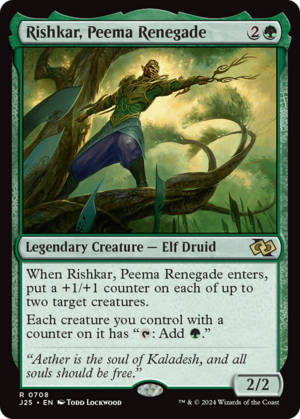
Card Details
Rishkar, Peema Renegade #708 Legendary Creature — Elf Druid
Info
| Color: | |
| Identifies: | |
| Cost: |
|
| Rarity: | Rare |
| Converted Cost: | 3 |
| Power/Toughness: | 2/2 |
| Types: | |
| SubTypes: | |
| Languages: |
|
| Layout: | Normal |
| Rank: | |
| Saltiness: |
Rules
Legalities
Modern
Competitivebrawl
Brawl
Historic
Oldschool
Standard
Alchemy
Pioneer
Legacy
Duel
Pauper
Predh
Commander
Timeless
Vintage
Penny
Oathbreaker
Paupercommander
Future
Standardbrawl
Gladiator
Premodern
Text
When Rishkar enters, put a +1/+1counteron each of up to two target creatures. Each creature you control with acounteron it has ": Add ." 
Card Details
Galadhrim Guide #619 Creature — Elf Scout
Info
| Color: | |
| Identifies: | |
| Cost: |
|
| Rarity: | Common |
| Converted Cost: | 4 |
| Power/Toughness: | 3/4 |
| Types: | |
| SubTypes: | |
| Languages: |
|
| Layout: | Normal |
| Rank: | |
| Saltiness: |
Abilities/Keywords
Rules
Prices
Legalities
Modern
Competitivebrawl
Brawl
Historic
Oldschool
Standard
Alchemy
Pioneer
Legacy
Duel
Pauper
Predh
Commander
Timeless
Vintage
Penny
Oathbreaker
Paupercommander
Future
Standardbrawl
Gladiator
Premodern
Text
When this creature enters, scry 2.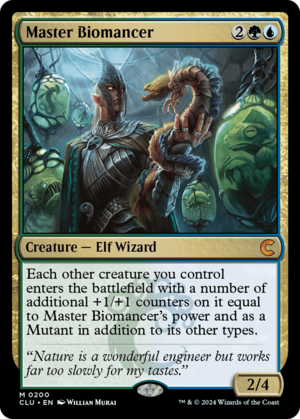
Card Details
Master Biomancer #200 Creature — Elf Wizard
Info
| Color: | |
| Identifies: | |
| Cost: |
|
| Rarity: | Mythic |
| Converted Cost: | 4 |
| Power/Toughness: | 2/4 |
| Types: | |
| SubTypes: | |
| Languages: |
|
| Layout: | Normal |
| Rank: | |
| Saltiness: |
Rules
Legalities
Modern
Competitivebrawl
Brawl
Historic
Oldschool
Standard
Alchemy
Pioneer
Legacy
Duel
Pauper
Predh
Commander
Timeless
Vintage
Penny
Oathbreaker
Paupercommander
Future
Standardbrawl
Gladiator
Premodern
Text
Each other creature you control enters with a number of additional +1/+1 counters on it equal to this creature's power and as a Mutant in addition to its other types.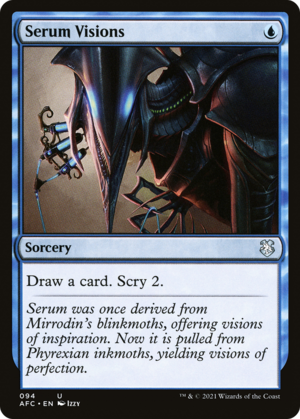
Card Details
Serum Visions #94 Sorcery
Info
| Color: | |
| Identifies: | |
| Cost: |
|
| Rarity: | Uncommon |
| Converted Cost: | 1 |
| Power/Toughness: | / |
| Types: | |
| SubTypes: | |
| Languages: |
|
| Layout: | Normal |
| Rank: | |
| Saltiness: |
Abilities/Keywords
Rules
Legalities
Modern
Competitivebrawl
Brawl
Historic
Oldschool
Standard
Alchemy
Pioneer
Legacy
Duel
Pauper
Predh
Commander
Timeless
Vintage
Penny
Oathbreaker
Paupercommander
Future
Standardbrawl
Gladiator
Premodern
Text
Draw a card. Scry 2.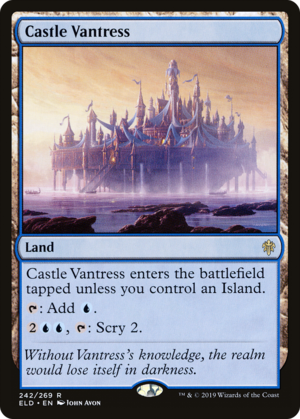
Card Details
Castle Vantress #242 Land
Info
| Color: | |
| Identifies: | |
| Cost: | |
| Rarity: | Rare |
| Converted Cost: | 0 |
| Power/Toughness: | / |
| Types: | |
| SubTypes: | |
| Languages: |
|
| Layout: | Normal |
| Rank: | |
| Saltiness: |
Abilities/Keywords
Rules
Prices
Legalities
Modern
Competitivebrawl
Brawl
Historic
Oldschool
Standard
Alchemy
Pioneer
Legacy
Duel
Pauper
Predh
Commander
Timeless
Vintage
Penny
Oathbreaker
Paupercommander
Future
Standardbrawl
Gladiator
Premodern
Text
This land enters tapped unless you control an Island.: Add .
 , : Scry 2.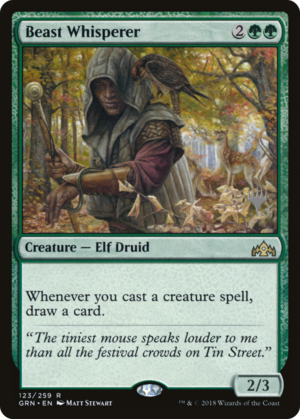
Card Details
Beast Whisperer #123p Creature — Elf Druid
Info
| Color: | |
| Identifies: | |
| Cost: |
|
| Rarity: | Rare |
| Converted Cost: | 4 |
| Power/Toughness: | 2/3 |
| Types: | |
| SubTypes: | |
| Languages: |
|
| Layout: | Normal |
| Rank: | |
| Saltiness: |
Rules
Prices
Legalities
Modern
Competitivebrawl
Brawl
Historic
Oldschool
Standard
Alchemy
Pioneer
Legacy
Duel
Pauper
Predh
Commander
Timeless
Vintage
Penny
Oathbreaker
Paupercommander
Future
Standardbrawl
Gladiator
Premodern
Text
Whenever you cast a creature spell, draw a card.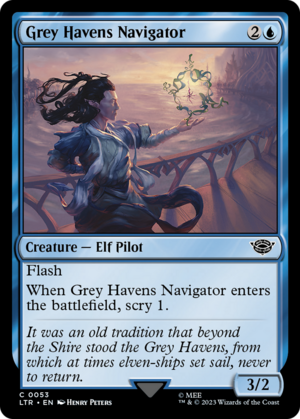
Card Details
Grey Havens Navigator #53 Creature — Elf Pilot
Info
| Color: | |
| Identifies: | |
| Cost: |
|
| Rarity: | Common |
| Converted Cost: | 3 |
| Power/Toughness: | 3/2 |
| Types: | |
| SubTypes: | |
| Languages: |
|
| Layout: | Normal |
| Rank: | |
| Saltiness: |
Abilities/Keywords
Rules
Prices
Legalities
Modern
Competitivebrawl
Brawl
Historic
Oldschool
Standard
Alchemy
Pioneer
Legacy
Duel
Pauper
Predh
Commander
Timeless
Vintage
Penny
Oathbreaker
Paupercommander
Future
Standardbrawl
Gladiator
Premodern
Text
Flash When this creature enters, scry 1.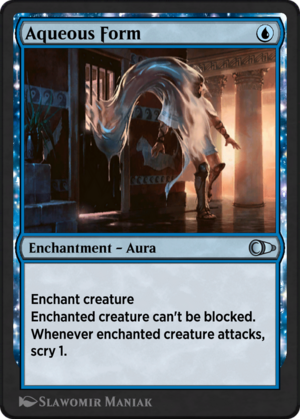
Card Details
Aqueous Form #45 Enchantment — Aura
Info
| Color: | |
| Identifies: | |
| Cost: |
|
| Rarity: | Uncommon |
| Converted Cost: | 1 |
| Power/Toughness: | / |
| Types: | |
| SubTypes: | |
| Languages: |
|
| Layout: | Normal |
| Rank: | |
| Saltiness: |
Abilities/Keywords
Rules
Prices
| Seller | Price |
|---|
Legalities
Modern
Competitivebrawl
Brawl
Historic
Oldschool
Standard
Alchemy
Pioneer
Legacy
Duel
Pauper
Predh
Commander
Timeless
Vintage
Penny
Oathbreaker
Paupercommander
Future
Standardbrawl
Gladiator
Premodern
Text
Enchant creature Enchanted creature can't be blocked. Whenever enchanted creature attacks, scry 1. (Look at the top card of your library. You may put that card on the bottom.)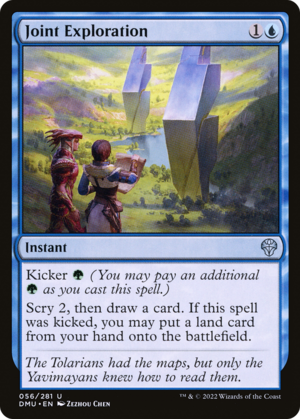
Card Details
Joint Exploration #56 Instant
Info
| Color: | |
| Identifies: | |
| Cost: |
|
| Rarity: | Uncommon |
| Converted Cost: | 2 |
| Power/Toughness: | / |
| Types: | |
| SubTypes: | |
| Languages: |
|
| Layout: | Normal |
| Rank: | |
| Saltiness: |
Abilities/Keywords
Rules
Prices
Legalities
Modern
Competitivebrawl
Brawl
Historic
Oldschool
Standard
Alchemy
Pioneer
Legacy
Duel
Pauper
Predh
Commander
Timeless
Vintage
Penny
Oathbreaker
Paupercommander
Future
Standardbrawl
Gladiator
Premodern
Text
Kicker (You may pay an additional as you cast this spell.)
Scry 2, then draw a card. If this spell was kicked, you may put a land card from your hand onto the battlefield. 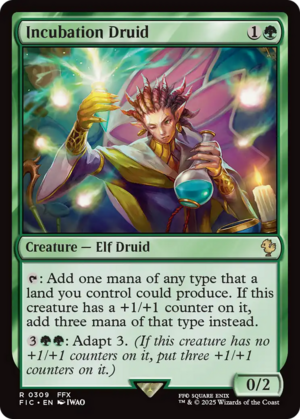
Card Details
Incubation Druid #309 Creature — Elf Druid
Info
| Color: | |
| Identifies: | |
| Cost: |
|
| Rarity: | Rare |
| Converted Cost: | 2 |
| Power/Toughness: | 0/2 |
| Types: | |
| SubTypes: | |
| Languages: |
|
| Layout: | Normal |
| Rank: | |
| Saltiness: |
Abilities/Keywords
Rules
Prices
Legalities
Modern
Competitivebrawl
Brawl
Historic
Oldschool
Standard
Alchemy
Pioneer
Legacy
Duel
Pauper
Predh
Commander
Timeless
Vintage
Penny
Oathbreaker
Paupercommander
Future
Standardbrawl
Gladiator
Premodern
Text
: Add one mana of any type that a land you control could produce. If this creature has a +1/+1counteron it, add three mana of that type instead.
 : Adapt 3. (If this creature has no +1/+1 counters on it, put three +1/+1 counters on it.)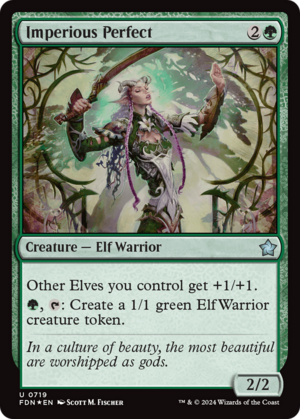
Card Details
Imperious Perfect #719 Creature — Elf Warrior
Info
| Color: | |
| Identifies: | |
| Cost: |
|
| Rarity: | Uncommon |
| Converted Cost: | 3 |
| Power/Toughness: | 2/2 |
| Types: | |
| SubTypes: | |
| Languages: |
|
| Layout: | Normal |
| Rank: | |
| Saltiness: | |
| Tokens: |
Rules
Legalities
Modern
Competitivebrawl
Brawl
Historic
Oldschool
Standard
Alchemy
Pioneer
Legacy
Duel
Pauper
Predh
Commander
Timeless
Vintage
Penny
Oathbreaker
Paupercommander
Future
Standardbrawl
Gladiator
Premodern
Text
Other Elves you control get +1/+1., : Create a 1/1 green Elf Warrior creature token. 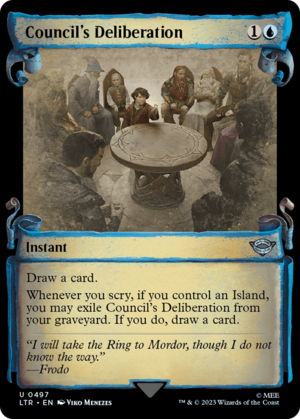
Card Details
Council's Deliberation #497 Instant
Info
| Color: | |
| Identifies: | |
| Cost: |
|
| Rarity: | Uncommon |
| Converted Cost: | 2 |
| Power/Toughness: | / |
| Types: | |
| SubTypes: | |
| Languages: |
|
| Layout: | Normal |
| Rank: | |
| Saltiness: |
Rules
Prices
Legalities
Modern
Competitivebrawl
Brawl
Historic
Oldschool
Standard
Alchemy
Pioneer
Legacy
Duel
Pauper
Predh
Commander
Timeless
Vintage
Penny
Oathbreaker
Paupercommander
Future
Standardbrawl
Gladiator
Premodern
Text
Draw a card. Whenever you scry, if you control an Island, you may exile this card from your graveyard. If you do, draw a card.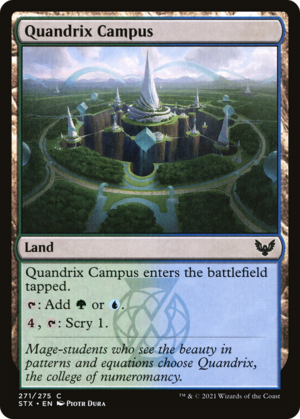
Card Details
Quandrix Campus #271 Land
Info
| Color: | |
| Identifies: | |
| Cost: | |
| Rarity: | Common |
| Converted Cost: | 0 |
| Power/Toughness: | / |
| Types: | |
| SubTypes: | |
| Languages: |
|
| Layout: | Normal |
| Rank: | |
| Saltiness: |
Abilities/Keywords
Rules
Prices
Legalities
Modern
Competitivebrawl
Brawl
Historic
Oldschool
Standard
Alchemy
Pioneer
Legacy
Duel
Pauper
Predh
Commander
Timeless
Vintage
Penny
Oathbreaker
Paupercommander
Future
Standardbrawl
Gladiator
Premodern
Text
This land enters tapped.: Add or .
, : Scry 1. (Look at the top card of your library. You may put that card on the bottom.) 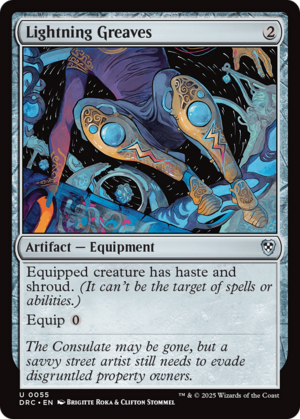
Card Details
Lightning Greaves #55 Artifact — Equipment
Info
| Color: | |
| Identifies: | |
| Cost: |
|
| Rarity: | Uncommon |
| Converted Cost: | 2 |
| Power/Toughness: | / |
| Types: | |
| SubTypes: | |
| Languages: |
|
| Layout: | Normal |
| Rank: | |
| Saltiness: |
Abilities/Keywords
Rules
Legalities
Modern
Competitivebrawl
Brawl
Historic
Oldschool
Standard
Alchemy
Pioneer
Legacy
Duel
Pauper
Predh
Commander
Timeless
Vintage
Penny
Oathbreaker
Paupercommander
Future
Standardbrawl
Gladiator
Premodern
Text
Equipped creature has haste and shroud. (It can't be the target of spells or abilities.) Equip
Card Details
Galadriel, Elven-Queen #462 Legendary Creature — Elf Noble
Info
| Color: | |
| Identifies: | |
| Cost: |
|
| Rarity: | Mythic |
| Converted Cost: | 4 |
| Power/Toughness: | 4/5 |
| Types: | |
| SubTypes: | |
| Languages: |
|
| Layout: | Normal |
| Rank: | |
| Saltiness: | |
| Tokens: |
Abilities/Keywords
Rules
Prices
Legalities
Modern
Competitivebrawl
Brawl
Historic
Oldschool
Standard
Alchemy
Pioneer
Legacy
Duel
Pauper
Predh
Commander
Timeless
Vintage
Penny
Oathbreaker
Paupercommander
Future
Standardbrawl
Gladiator
Premodern
Text
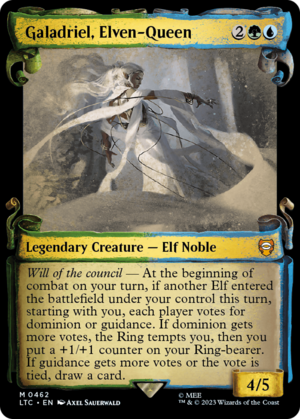
Will of the council — At the beginning of combat on your turn, if another Elf entered the battlefield under your control this turn, starting with you, each player votes for dominion or guidance. If dominion gets more votes, the Ring tempts you, then you put a +1/+1counteron your Ring-bearer. If guidance gets more votes or the vote is tied, draw a card.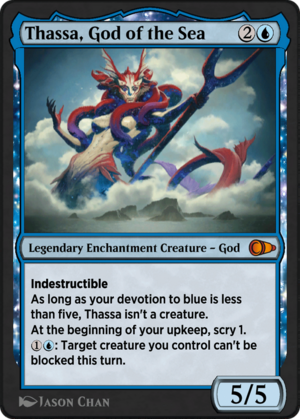
Card Details
Thassa, God of the Sea #288 Legendary Enchantment Creature — God
Info
| Color: | |
| Identifies: | |
| Cost: |
|
| Rarity: | Mythic |
| Converted Cost: | 3 |
| Power/Toughness: | 5/5 |
| Types: | |
| SubTypes: | |
| Languages: |
|
| Layout: | Normal |
| Rank: | |
| Saltiness: |
Abilities/Keywords
Rules
Prices
| Seller | Price |
|---|
Legalities
Modern
Competitivebrawl
Brawl
Historic
Oldschool
Standard
Alchemy
Pioneer
Legacy
Duel
Pauper
Predh
Commander
Timeless
Vintage
Penny
Oathbreaker
Paupercommander
Future
Standardbrawl
Gladiator
Premodern
Text
Indestructible As long as your devotion to blue is less than five, Thassa isn't a creature. (Each in the mana costs of permanents you control counts toward your devotion to blue.)
At the beginning of your upkeep, scry 1.
: Target creature you control can't be blocked this turn. 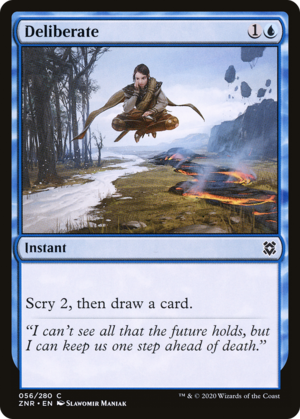
Card Details
Deliberate #56 Instant
Info
| Color: | |
| Identifies: | |
| Cost: |
|
| Rarity: | Common |
| Converted Cost: | 2 |
| Power/Toughness: | / |
| Types: | |
| SubTypes: | |
| Languages: |
|
| Layout: | Normal |
| Rank: | |
| Saltiness: |
Abilities/Keywords
Rules
Prices
Legalities
Modern
Competitivebrawl
Brawl
Historic
Oldschool
Standard
Alchemy
Pioneer
Legacy
Duel
Pauper
Predh
Commander
Timeless
Vintage
Penny
Oathbreaker
Paupercommander
Future
Standardbrawl
Gladiator
Premodern
Text
Scry 2, then draw a card.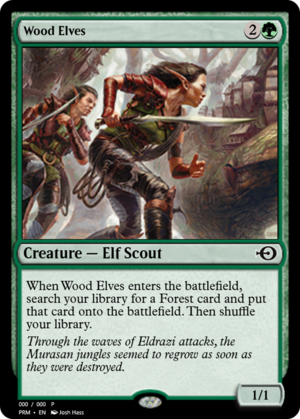
Card Details
Wood Elves #62527 Creature — Elf Scout
Info
| Color: | |
| Identifies: | |
| Cost: |
|
| Rarity: | Common |
| Converted Cost: | 3 |
| Power/Toughness: | 1/1 |
| Types: | |
| SubTypes: | |
| Languages: |
|
| Layout: | Normal |
| Rank: | |
| Saltiness: |
Rules
Prices
| Seller | Price |
|---|
Legalities
Modern
Competitivebrawl
Brawl
Historic
Oldschool
Standard
Alchemy
Pioneer
Legacy
Duel
Pauper
Predh
Commander
Timeless
Vintage
Penny
Oathbreaker
Paupercommander
Future
Standardbrawl
Gladiator
Premodern
Text
When this creature enters, search your library for a Forest card, put that card onto the battlefield, thenshuffle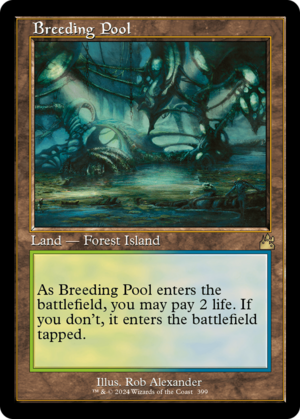
Card Details
Breeding Pool #399 Land — Forest Island
Info
| Color: | |
| Identifies: | |
| Cost: | |
| Rarity: | Rare |
| Converted Cost: | 0 |
| Power/Toughness: | / |
| Types: | |
| SubTypes: | |
| Languages: |
|
| Layout: | Normal |
| Rank: | |
| Saltiness: |
Rules
Prices
Legalities
Modern
Competitivebrawl
Brawl
Historic
Oldschool
Standard
Alchemy
Pioneer
Legacy
Duel
Pauper
Predh
Commander
Timeless
Vintage
Penny
Oathbreaker
Paupercommander
Future
Standardbrawl
Gladiator
Premodern
Text
(: Add or .)
As this land enters, you may pay 2 life. If you don't, it enters tapped. 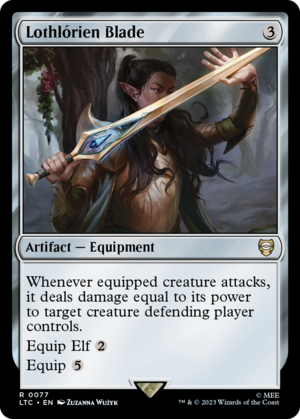
Card Details
Lothlórien Blade #77 Artifact — Equipment
Info
| Color: | |
| Identifies: | |
| Cost: |
|
| Rarity: | Rare |
| Converted Cost: | 3 |
| Power/Toughness: | / |
| Types: | |
| SubTypes: | |
| Languages: |
|
| Layout: | Normal |
| Rank: | |
| Saltiness: |
Abilities/Keywords
Rules
Legalities
Modern
Competitivebrawl
Brawl
Historic
Oldschool
Standard
Alchemy
Pioneer
Legacy
Duel
Pauper
Predh
Commander
Timeless
Vintage
Penny
Oathbreaker
Paupercommander
Future
Standardbrawl
Gladiator
Premodern
Text
Whenever equipped creature attacks, it deals damage equal to its power to target creature defending player controls. Equip Elf
Equip 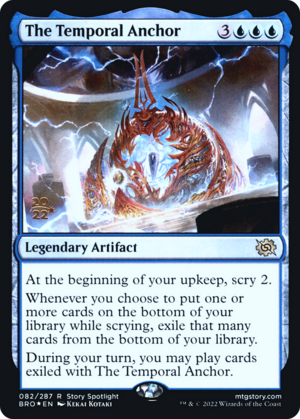
Card Details
The Temporal Anchor #82s Legendary Artifact
Info
| Color: | |
| Identifies: | |
| Cost: |
|
| Rarity: | Rare |
| Converted Cost: | 6 |
| Power/Toughness: | / |
| Types: | |
| SubTypes: | |
| Languages: |
|
| Layout: | Normal |
| Rank: | |
| Saltiness: |
Abilities/Keywords
Rules
Legalities
Modern
Competitivebrawl
Brawl
Historic
Oldschool
Standard
Alchemy
Pioneer
Legacy
Duel
Pauper
Predh
Commander
Timeless
Vintage
Penny
Oathbreaker
Paupercommander
Future
Standardbrawl
Gladiator
Premodern
Text
At the beginning of your upkeep, scry 2. Whenever you choose to put one or more cards on the bottom of your library while scrying, exile that many cards from the bottom of your library. During your turn, you may play cards exiled with The Temporal Anchor.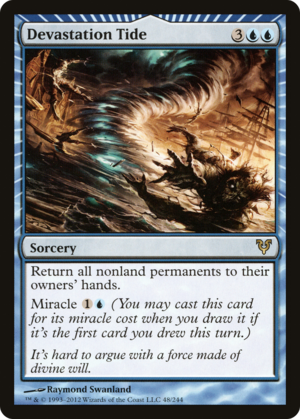
Card Details
Devastation Tide #48 Sorcery
Info
| Color: | |
| Identifies: | |
| Cost: |
|
| Rarity: | Rare |
| Converted Cost: | 5 |
| Power/Toughness: | / |
| Types: | |
| SubTypes: | |
| Languages: |
|
| Layout: | Normal |
| Rank: | |
| Saltiness: |
Abilities/Keywords
Rules
Prices
Legalities
Modern
Competitivebrawl
Brawl
Historic
Oldschool
Standard
Alchemy
Pioneer
Legacy
Duel
Pauper
Predh
Commander
Timeless
Vintage
Penny
Oathbreaker
Paupercommander
Future
Standardbrawl
Gladiator
Premodern
Text
Return all nonland permanents to their owners' hands. Miracle (You may cast this card for its miracle cost when you draw it if it's the first card you drew this turn.) 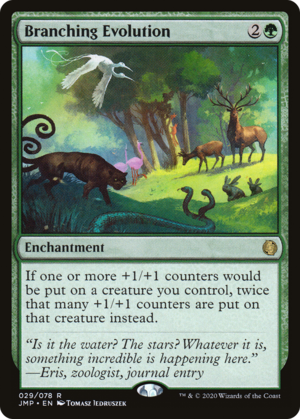
Card Details
Branching Evolution #29 Enchantment
Info
| Color: | |
| Identifies: | |
| Cost: |
|
| Rarity: | Rare |
| Converted Cost: | 3 |
| Power/Toughness: | / |
| Types: | |
| SubTypes: | |
| Languages: |
|
| Layout: | Normal |
| Rank: | |
| Saltiness: |
Rules
Legalities
Modern
Competitivebrawl
Brawl
Historic
Oldschool
Standard
Alchemy
Pioneer
Legacy
Duel
Pauper
Predh
Commander
Timeless
Vintage
Penny
Oathbreaker
Paupercommander
Future
Standardbrawl
Gladiator
Premodern
Text
If one or more +1/+1 counters would be put on a creature you control, twice that many +1/+1 counters are put on that creature instead.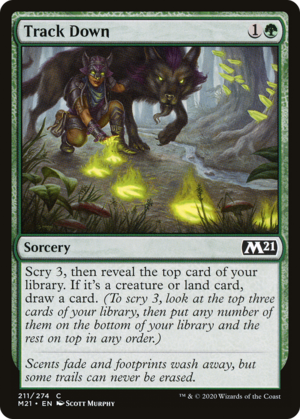
Card Details
Track Down #211 Sorcery
Info
| Color: | |
| Identifies: | |
| Cost: |
|
| Rarity: | Common |
| Converted Cost: | 2 |
| Power/Toughness: | / |
| Types: | |
| SubTypes: | |
| Languages: |
|
| Layout: | Normal |
| Rank: | |
| Saltiness: |
Abilities/Keywords
Rules
Prices
Legalities
Modern
Competitivebrawl
Brawl
Historic
Oldschool
Standard
Alchemy
Pioneer
Legacy
Duel
Pauper
Predh
Commander
Timeless
Vintage
Penny
Oathbreaker
Paupercommander
Future
Standardbrawl
Gladiator
Premodern
Text
Scry 3, then reveal the top card of your library. If it's a creature or land card, draw a card. (To scry 3, look at the top three cards of your library, then put any number of them on the bottom and the rest on top in any order.)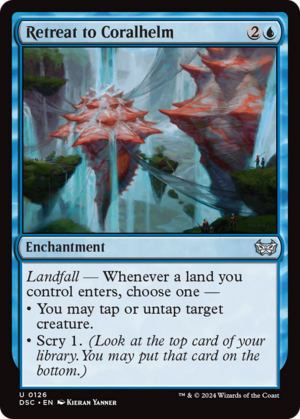
Card Details
Retreat to Coralhelm #126 Enchantment
Info
| Color: | |
| Identifies: | |
| Cost: |
|
| Rarity: | Uncommon |
| Converted Cost: | 3 |
| Power/Toughness: | / |
| Types: | |
| SubTypes: | |
| Languages: |
|
| Layout: | Normal |
| Rank: | |
| Saltiness: |
Abilities/Keywords
Rules
Legalities
Modern
Competitivebrawl
Brawl
Historic
Oldschool
Standard
Alchemy
Pioneer
Legacy
Duel
Pauper
Predh
Commander
Timeless
Vintage
Penny
Oathbreaker
Paupercommander
Future
Standardbrawl
Gladiator
Premodern
Text
Landfall — Whenever a land you control enters, choose one — • You may tap or untap target creature. • Scry 1. (Look at the top card of your library. You may put that card on the bottom.)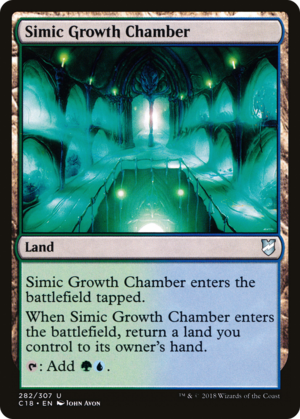
Card Details
Simic Growth Chamber #282 Land
Info
| Color: | |
| Identifies: | |
| Cost: | |
| Rarity: | Uncommon |
| Converted Cost: | 0 |
| Power/Toughness: | / |
| Types: | |
| SubTypes: | |
| Languages: |
|
| Layout: | Normal |
| Rank: | |
| Saltiness: |
Rules
Legalities
Modern
Competitivebrawl
Brawl
Historic
Oldschool
Standard
Alchemy
Pioneer
Legacy
Duel
Pauper
Predh
Commander
Timeless
Vintage
Penny
Oathbreaker
Paupercommander
Future
Standardbrawl
Gladiator
Premodern
Text
This land enters tapped. When this land enters, return a land you control to its owner's hand.: Add . 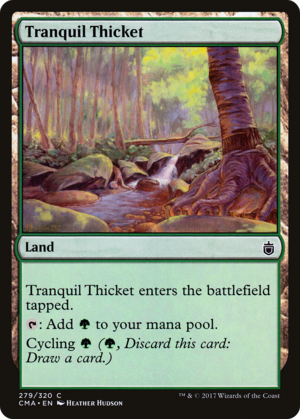
Card Details
Tranquil Thicket #279 Land
Info
| Color: | |
| Identifies: | |
| Cost: | |
| Rarity: | Common |
| Converted Cost: | 0 |
| Power/Toughness: | / |
| Types: | |
| SubTypes: | |
| Languages: |
|
| Layout: | Normal |
| Rank: | |
| Saltiness: |
Abilities/Keywords
Rules
Legalities
Modern
Competitivebrawl
Brawl
Historic
Oldschool
Standard
Alchemy
Pioneer
Legacy
Duel
Pauper
Predh
Commander
Timeless
Vintage
Penny
Oathbreaker
Paupercommander
Future
Standardbrawl
Gladiator
Premodern
Text
This land enters tapped.: Add .
Cycling (,Discardthis card: Draw a card.) 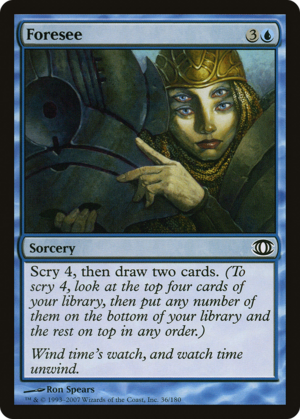
Card Details
Foresee #36 Sorcery
Info
| Color: | |
| Identifies: | |
| Cost: |
|
| Rarity: | Common |
| Converted Cost: | 4 |
| Power/Toughness: | / |
| Types: | |
| SubTypes: | |
| Languages: |
|
| Layout: | Normal |
| Rank: | |
| Saltiness: |
Abilities/Keywords
Rules
Prices
Legalities
Modern
Competitivebrawl
Brawl
Historic
Oldschool
Standard
Alchemy
Pioneer
Legacy
Duel
Pauper
Predh
Commander
Timeless
Vintage
Penny
Oathbreaker
Paupercommander
Future
Standardbrawl
Gladiator
Premodern
Text
Scry 4, then draw two cards.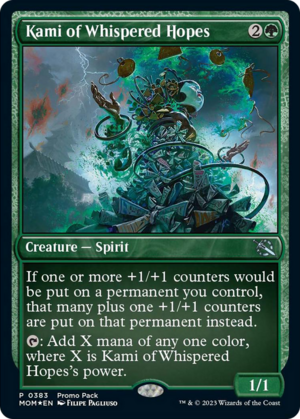
Card Details
Kami of Whispered Hopes #383 Creature — Spirit
Info
| Color: | |
| Identifies: | |
| Cost: |
|
| Rarity: | Uncommon |
| Converted Cost: | 3 |
| Power/Toughness: | 1/1 |
| Types: | |
| SubTypes: | |
| Languages: |
|
| Layout: | Normal |
| Rank: | |
| Saltiness: |
Rules
Prices
Legalities
Modern
Competitivebrawl
Brawl
Historic
Oldschool
Standard
Alchemy
Pioneer
Legacy
Duel
Pauper
Predh
Commander
Timeless
Vintage
Penny
Oathbreaker
Paupercommander
Future
Standardbrawl
Gladiator
Premodern
Text
If one or more +1/+1 counters would be put on a permanent you control, that many plus one +1/+1 counters are put on that permanent instead.: Add X mana of any one color, where X is this creature's power. 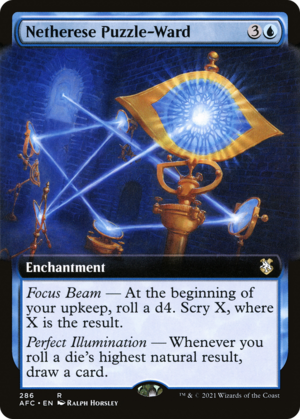
Card Details
Netherese Puzzle-Ward #286 Enchantment
Info
| Color: | |
| Identifies: | |
| Cost: |
|
| Rarity: | Rare |
| Converted Cost: | 4 |
| Power/Toughness: | / |
| Types: | |
| SubTypes: | |
| Languages: |
|
| Layout: | Normal |
| Rank: | |
| Saltiness: |
Abilities/Keywords
Rules
Text
Focus Beam — At the beginning of your upkeep, roll a d4. Scry X, where X is the result. Perfect Illumination — Whenever you roll a die's highest natural result, draw a card.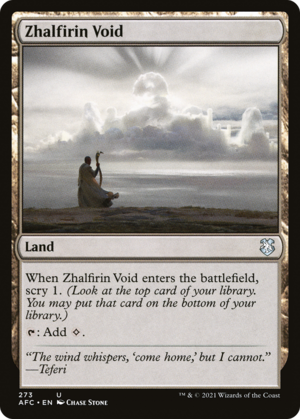
Card Details
Zhalfirin Void #273 Land
Info
| Color: | |
| Identifies: | |
| Cost: | |
| Rarity: | Uncommon |
| Converted Cost: | 0 |
| Power/Toughness: | / |
| Types: | |
| SubTypes: | |
| Languages: |
|
| Layout: | Normal |
| Rank: | |
| Saltiness: |
Abilities/Keywords
Rules
Legalities
Modern
Competitivebrawl
Brawl
Historic
Oldschool
Standard
Alchemy
Pioneer
Legacy
Duel
Pauper
Predh
Commander
Timeless
Vintage
Penny
Oathbreaker
Paupercommander
Future
Standardbrawl
Gladiator
Premodern
Text
When this land enters, scry 1. (Look at the top card of your library. You may put that card on the bottom.): Add . 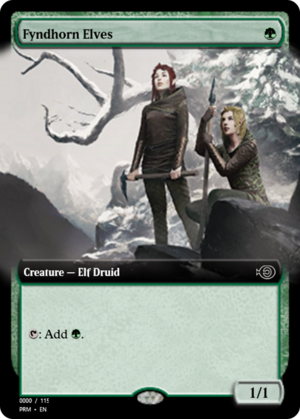
Card Details
Fyndhorn Elves #86118 Creature — Elf Druid
Info
| Color: | |
| Identifies: | |
| Cost: |
|
| Rarity: | Common |
| Converted Cost: | 1 |
| Power/Toughness: | 1/1 |
| Types: | |
| SubTypes: | |
| Languages: |
|
| Layout: | Normal |
| Rank: | |
| Saltiness: |
Rules
Prices
| Seller | Price |
|---|
Legalities
Modern
Competitivebrawl
Brawl
Historic
Oldschool
Standard
Alchemy
Pioneer
Legacy
Duel
Pauper
Predh
Commander
Timeless
Vintage
Penny
Oathbreaker
Paupercommander
Future
Standardbrawl
Gladiator
Premodern
Text
: Add . 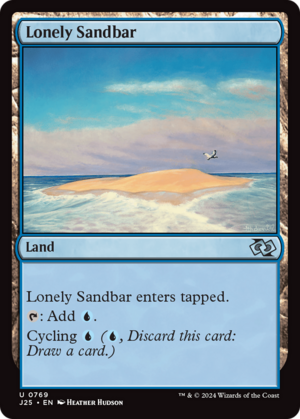
Card Details
Lonely Sandbar #769 Land
Info
| Color: | |
| Identifies: | |
| Cost: | |
| Rarity: | Uncommon |
| Converted Cost: | 0 |
| Power/Toughness: | / |
| Types: | |
| SubTypes: | |
| Languages: |
|
| Layout: | Normal |
| Rank: | |
| Saltiness: |
Abilities/Keywords
Rules
Legalities
Modern
Competitivebrawl
Brawl
Historic
Oldschool
Standard
Alchemy
Pioneer
Legacy
Duel
Pauper
Predh
Commander
Timeless
Vintage
Penny
Oathbreaker
Paupercommander
Future
Standardbrawl
Gladiator
Premodern
Text
This land enters tapped.: Add .
Cycling (,Discardthis card: Draw a card.) 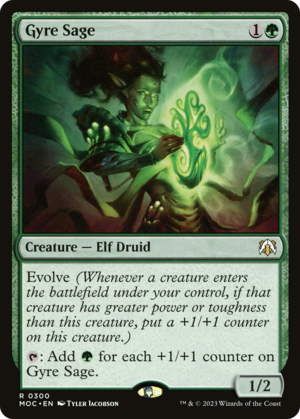
Card Details
Gyre Sage #300 Creature — Elf Druid
Info
| Color: | |
| Identifies: | |
| Cost: |
|
| Rarity: | Rare |
| Converted Cost: | 2 |
| Power/Toughness: | 1/2 |
| Types: | |
| SubTypes: | |
| Languages: |
|
| Layout: | Normal |
| Rank: | |
| Saltiness: |
Abilities/Keywords
Rules
Legalities
Modern
Competitivebrawl
Brawl
Historic
Oldschool
Standard
Alchemy
Pioneer
Legacy
Duel
Pauper
Predh
Commander
Timeless
Vintage
Penny
Oathbreaker
Paupercommander
Future
Standardbrawl
Gladiator
Premodern
Text
Evolve (Whenever a creature you control enters, if that creature has greater power or toughness than this creature, put a +1/+1counteron this creature.): Add for each +1/+1counteron this creature. 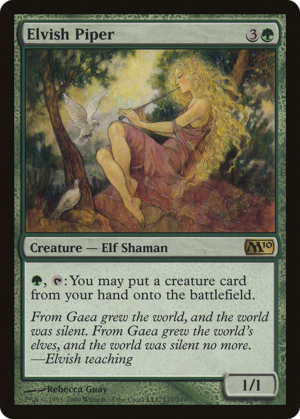
Card Details
Elvish Piper #177 Creature — Elf Shaman
Info
| Color: | |
| Identifies: | |
| Cost: |
|
| Rarity: | Rare |
| Converted Cost: | 4 |
| Power/Toughness: | 1/1 |
| Types: | |
| SubTypes: | |
| Languages: |
|
| Layout: | Normal |
| Rank: | |
| Saltiness: |
Rules
Prices
Legalities
Modern
Competitivebrawl
Brawl
Historic
Oldschool
Standard
Alchemy
Pioneer
Legacy
Duel
Pauper
Predh
Commander
Timeless
Vintage
Penny
Oathbreaker
Paupercommander
Future
Standardbrawl
Gladiator
Premodern
Text
, : You may put a creature card from your hand onto the battlefield. 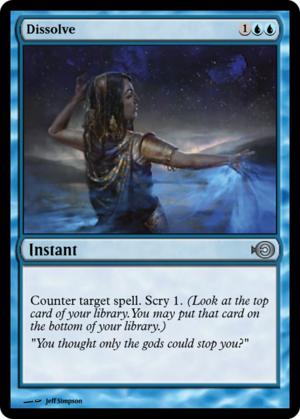
Card Details
Dissolve #52336 Instant
Info
| Color: | |
| Identifies: | |
| Cost: |
|
| Rarity: | Uncommon |
| Converted Cost: | 3 |
| Power/Toughness: | / |
| Types: | |
| SubTypes: | |
| Languages: |
|
| Layout: | Normal |
| Rank: | |
| Saltiness: |
Abilities/Keywords
Rules
Prices
| Seller | Price |
|---|
Legalities
Modern
Competitivebrawl
Brawl
Historic
Oldschool
Standard
Alchemy
Pioneer
Legacy
Duel
Pauper
Predh
Commander
Timeless
Vintage
Penny
Oathbreaker
Paupercommander
Future
Standardbrawl
Gladiator
Premodern
Text
Counter target spell. Scry 1. (Look at the top card of your library. You may put that card on the bottom.)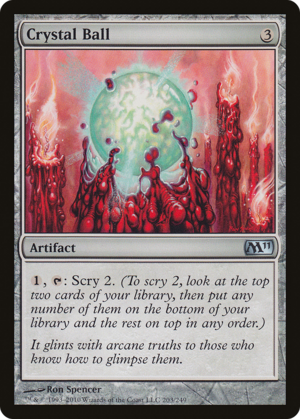
Card Details
Crystal Ball #203 Artifact
Info
| Color: | |
| Identifies: | |
| Cost: |
|
| Rarity: | Uncommon |
| Converted Cost: | 3 |
| Power/Toughness: | / |
| Types: | |
| SubTypes: | |
| Languages: |
|
| Layout: | Normal |
| Rank: | |
| Saltiness: |
Abilities/Keywords
Rules
Prices
Legalities
Modern
Competitivebrawl
Brawl
Historic
Oldschool
Standard
Alchemy
Pioneer
Legacy
Duel
Pauper
Predh
Commander
Timeless
Vintage
Penny
Oathbreaker
Paupercommander
Future
Standardbrawl
Gladiator
Premodern
Text
, : Scry 2. (Look at the top two cards of your library, then put any number of them on the bottom and the rest on top in any order.) 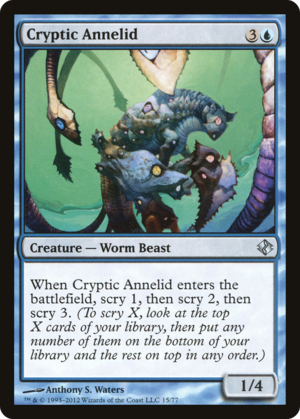
Card Details
Cryptic Annelid #15 Creature — Worm Beast
Info
| Color: | |
| Identifies: | |
| Cost: |
|
| Rarity: | Uncommon |
| Converted Cost: | 4 |
| Power/Toughness: | 1/4 |
| Types: | |
| SubTypes: | |
| Languages: |
|
| Layout: | Normal |
| Rank: | |
| Saltiness: |